The short answer
Pica is the repeated eating of non-food items such as fabric, rocks, plastic or wood. It's different from a puppy chewing something and dropping it, because dogs with pica swallow what they chew. Causes include anemia, intestinal parasites, digestive disease, boredom and anxiety, so a vet visit to rule out medical problems comes first. The real danger is an intestinal blockage, which is a surgical emergency. Treatment combines treating any medical cause with supervision, enrichment and training.
Call a vet now if your dog has
- Repeated vomiting after swallowing something
- Straining to poop, or passing little or no stool
- A hunched, painful or bloated belly, or crying when you touch it
- Refusing food or water
- Lethargy, weakness or hiding
- String, thread or tinsel hanging from the mouth or rectum (don't pull it)
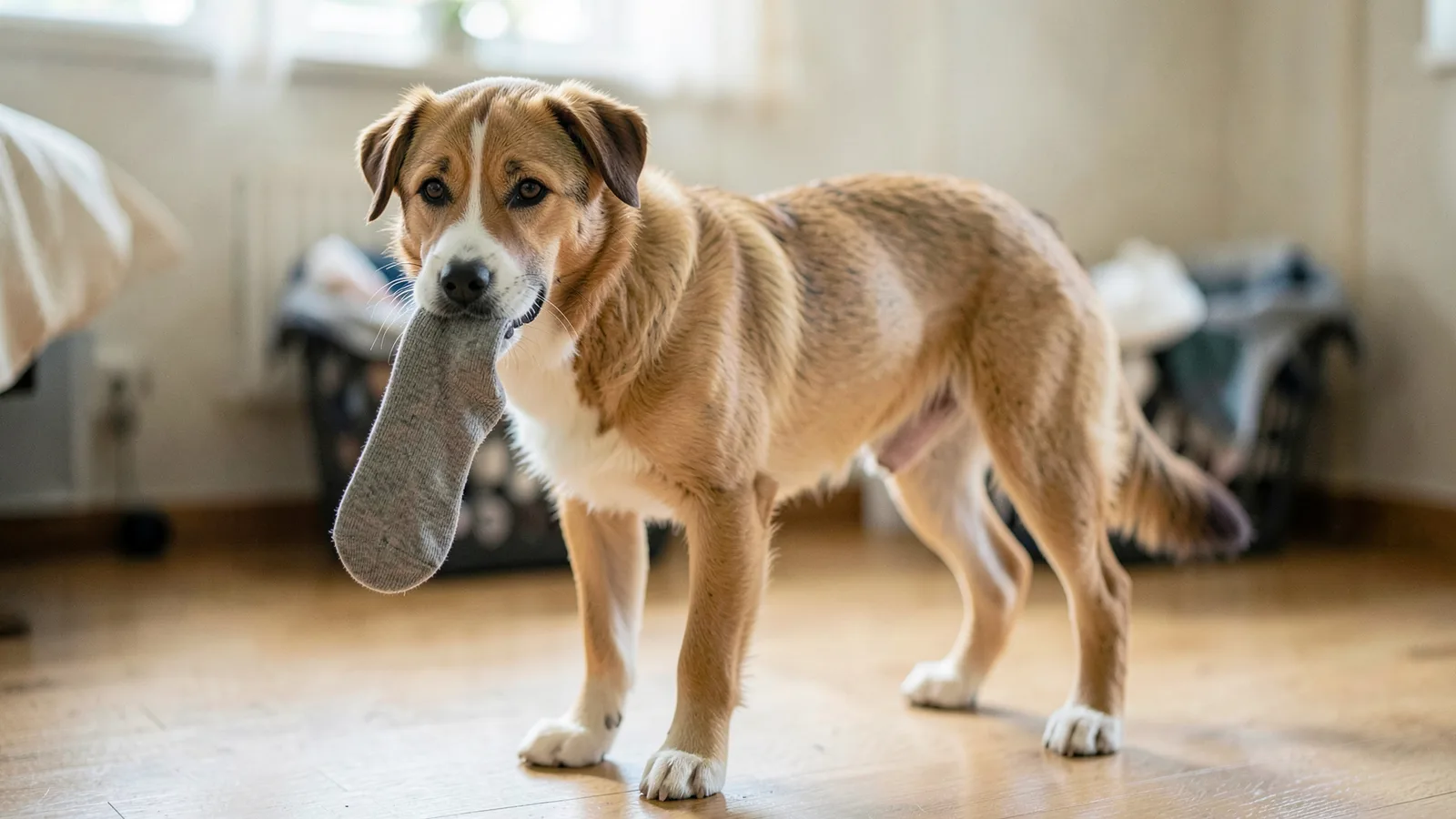
Most dogs chew things. Plenty of dogs swallow the odd sock. But some dogs keep doing it. They eat rocks on every walk, shred and swallow bedding, or seem to hunt down fabric and plastic. That repeated habit has a name: pica.
It's worth taking seriously for two reasons. It can be a sign of an underlying health problem. And what dogs swallow can block their intestines, which is an emergency. This guide explains the causes, the dangers, and what you can do.
What is pica in dogs?
Pica is the persistent eating of non-food items. Common targets include fabric, socks, plastic, paper, sticks, rocks, dirt and mulch. The key word is persistent. One swallowed sock isn't pica. A dog that keeps doing it is.
Pica versus normal puppy chewing
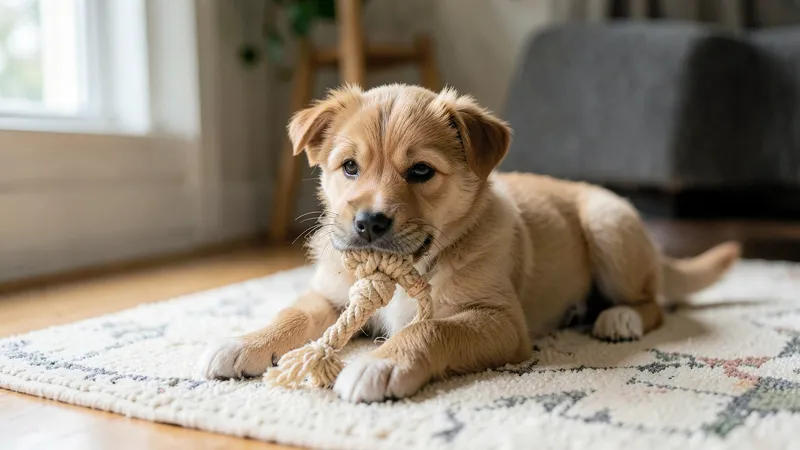
Puppies explore with their mouths. They chew shoes, table legs and your hand. Most of the time they spit out or drop what they can't eat. That's normal, and it's mostly about teething and curiosity. If you're dealing with a nipping puppy, our guide to how to stop a puppy from biting covers that stage.
Pica is different because the dog swallows the material. Think of it like the difference between a toddler mouthing a toy and a toddler eating the crayons. One is exploring. The other needs a closer look.
Pica versus eating poop
Eating stool is called coprophagia. It's a related but separate habit, and it has its own set of causes. Some vets include it under pica because it also means eating something that isn't food. Mention it to your vet either way. If your dog's stool or digestion has also changed, see our guide on blood in dog stool.
Why dogs develop pica
Causes fall into two groups: medical and behavioral. It can be hard to tell them apart at home, which is why a vet check matters.
Medical causes
Your vet will want to rule these out first:
- Anemia. A shortage of red blood cells can change appetite and cravings.
- Intestinal parasites. Worms can rob a dog of nutrients and upset the gut.
- Gastrointestinal disease. Inflammatory bowel disease and pancreatic insufficiency are examples listed by VCA.
- Nutritional deficiency or poor diet. A dog that isn't absorbing or getting enough nutrients may seek odd things.
- Other illnesses. Diabetes and Cushing's disease can increase appetite.
- Medication side effects. Corticosteroids and phenobarbital can make dogs ravenous.
If your dog is losing weight, has diarrhea or looks pale, tell your vet. Those clues point toward a medical cause.
Behavioral causes
Behavior is a common driver. According to the AKC, behavioral causes are more common than medical ones.
- Boredom. A dog left alone with nothing to do will invent a hobby. Eating the couch cushion is a hobby.
- Anxiety or stress. Chewing and swallowing can be a way to cope, a bit like nail biting in people.
- Attention seeking. If grabbing a sock makes you chase your dog, the habit gets rewarded.
- Compulsive behavior. In some dogs the habit becomes a repetitive pattern that's hard to break.
- Guarding. VCA notes that some dogs gulp items down quickly to stop their owner taking them.
Retrievers are often called more prone to pica, but the AKC says there's no strong evidence that breed alone explains it. Environment and enrichment matter more.
The real danger: swallowed objects
Here's what turns an odd habit into an emergency. When a dog swallows something that can't digest, it can lodge in the stomach or intestines. That's an obstruction. According to the ACVS, most foreign bodies that lodge in the stomach or intestines need surgery to remove.
An obstruction blocks food and fluid from passing. The gut can become damaged, and in the worst cases it can tear. VCA lists perforation as a life-threatening risk of pica.
Signs of a blockage
- Vomiting that keeps coming back
- Loss of appetite
- Belly pain, bloating or a hunched posture
- Straining, or little to no stool
- Diarrhea, sometimes bloody
- Lethargy and dehydration
If your dog is vomiting after eating something it shouldn't, read our guide to dog vomiting. But if you suspect a blockage, don't wait to see how it goes.
Why string and cloth are especially risky
Linear objects such as string, thread, tinsel, ribbon and cloth are the worst. One end can catch under the tongue or in the stomach. The rest keeps moving into the intestine. The gut bunches up around it like a drawstring, and the object can saw into the intestinal wall.
Never pull on string you can see hanging from your dog's mouth or rear end. It may be anchored inside, and pulling can cause tearing. Go straight to a vet.
How urgent is it? Swallowed items at a glance
| Item swallowed | Urgency | What to do |
|---|---|---|
| String, thread, tinsel, ribbon, yarn | Emergency | See a vet immediately, even if your dog seems fine |
| Sharp items (bones, needles, glass, hooks) | Emergency | Go to a vet now |
| Batteries, magnets, coins | Emergency | Go to a vet now, these can be toxic or damaging |
| Corn cobs, large rocks, ball and toy pieces | Urgent | Call your vet the same day, these commonly block the gut |
| Socks and underwear | Urgent | Call your vet, small dogs are at higher risk |
| A small piece of paper, a small stick, a bit of grass | Usually low | Watch closely and call your vet if any symptoms appear |
If the item might also be toxic, see our page on poisoning emergencies.
Don't make your dog vomit at home
Inducing vomiting isn't safe for every item. Sharp objects can cut the throat on the way back up, and some items cause more harm coming up. Call your vet or an animal poison hotline and follow their advice.
How vets diagnose and treat pica
Expect a full history. Your vet will ask what your dog eats, how often, and when it started. Then comes an exam and likely tests.
- Blood work to check for anemia and organ disease
- Fecal test to look for parasites
- Urinalysis
- X-rays or ultrasound to look for foreign bodies
- Endoscopy in some cases, to see inside the stomach or take a sample
Treating a medical cause
If a medical issue shows up, treating it often helps. That might mean deworming, a diet change or managing a digestive condition. VCA also mentions fiber-rich diets in some behavioral cases.
Treating a swallowed object
Small, smooth items may pass with hospital monitoring and fluids. Some can be retrieved with endoscopy. Many need surgery to open the stomach or intestine, and damaged bowel may need to be removed. Dogs usually stay in the hospital for about 12 to 24 hours after surgery.
Treating the habit
For behavioral pica, the plan usually combines several parts:
- Management. Keep tempting items out of reach. Pick up socks, toys and rocks.
- Supervision. Watch your dog in the yard and on walks. A basket muzzle can help in some dogs under vet guidance.
- Enrichment. Puzzle feeders, sniff walks, training games and chew toys that are safe to chew.
- Exercise. A tired dog is a calmer dog.
- Training. Teach a solid "drop it" and "leave it" using treats. Trade, don't snatch.
- Anxiety support. For anxious dogs, your vet may suggest behavior modification and, sometimes, medication.
Don't chase your dog when it grabs something. That turns it into a game. Calmly offer a treat swap instead.
What a vet visit looks like in practice
Many owners put off a visit because they're not sure it's "serious enough." If pica is regular, it is. A good appointment starts with your notes. Write down what your dog eats, how often, and whether it happens at certain times, such as when you leave the house.
Useful details include:
- When the habit started and whether it changed suddenly
- Your dog's diet, treats and any recent switch
- Weight changes, diarrhea, vomiting or a dull coat
- Any medication your dog takes, since some drugs boost appetite
- Photos of anything your dog has swallowed or been caught chewing
Your vet will use that picture to decide what to test and what to try first. If the tests come back clear, the cause is more likely behavioral, and the plan shifts toward routine, enrichment and training.
Daily routines that help dogs with pica
Dogs with pica often do best with a predictable day. A few ideas worth trying:
Feed from puzzles, not bowls
Eating a meal from a snuffle mat or puzzle feeder takes 10 to 20 minutes instead of 30 seconds. That uses up some of the drive to scavenge. It also gives a bored dog a job.
Plan the alone time
If your dog targets things when you're out, set up a safe space before you leave. A pen or a dog-proofed room, a long-lasting safe chew and a tired dog make a big difference. Pair this with short, gradual practice at being alone if your dog seems anxious.
Walk with a purpose
Let your dog sniff on walks. It's mentally tiring in a way that fast walking isn't. Use a short lead in spots where your dog hoovers up rocks or litter, and carry high-value treats for trading.
Reward good choices
Each time your dog ignores a tempting item, mark it and reward it. A dog that gets paid for walking past a sock will walk past more socks.
Puppy-proofing and prevention
You can lower the risk with a few simple habits.
- Keep laundry, shoes and kids' toys off the floor.
- Use bins with lids for trash.
- Skip stringy toys and soft toys that shed stuffing if your dog tears them up.
- Pick toys that fit your dog's size and chewing style.
- Take down tinsel and ribbon around holidays.
- Practice trading from puppyhood, so giving things up feels rewarding.
Check what your dog picks up on walks
Many dogs with pica scavenge outside. Teach "leave it" early, and use a lead in places where you can't control what's on the ground. Sticks, rocks and mulch are common culprits.
When to see a vet
Some situations are clear-cut.
Go to a vet now if:
- Your dog swallowed string, a sharp object, a battery or a magnet
- There's repeated vomiting, a painful belly, straining or refusal to eat
- Your dog seems lethargic or weak after eating something odd
Book a vet visit soon if:
- Your dog regularly eats non-food items
- Pica started suddenly in an adult dog
- You notice weight loss, pale gums, diarrhea or a change in appetite
- The habit isn't improving despite better supervision and enrichment
Be honest with your vet about what your dog eats and how often. It helps to bring a list or photos. Early treatment of a medical cause, plus a few changes at home, often makes a big difference.
Common questions
Is pica the same as a puppy chewing everything?
No. Puppies chew and mouth things as they explore and teethe, and most spit out or drop what they can't eat. Pica means a dog repeatedly swallows non-food items. If your dog is eating what it chews, treat it as more than normal puppy behavior.
Is eating poop pica?
Eating stool is called coprophagia. Some vets group it with pica because it's also eating something that isn't food, but it often has its own causes and fixes. It's still worth mentioning to your vet, especially if it's new or comes with weight loss or diarrhea.
Can a dog grow out of pica?
Some puppies do as they mature, particularly if they're exploring and teething. But adult dogs with pica rarely stop on their own. A vet check, closer supervision and more mental stimulation are the usual first steps.
How do I know if my dog swallowed something dangerous?
Watch for vomiting, a painful belly, straining, loss of appetite and lethargy. If you saw your dog swallow something sharp, toxic, or long and stringy, call a vet right away. Don't wait for symptoms, and don't make your dog vomit unless a vet tells you to.
Sources
- Pica in Dogs, VCA Animal Hospitals
- Pica in Dogs, American Kennel Club
- Gastrointestinal Foreign Bodies, American College of Veterinary Surgeons
This article is general information to help you decide what to do next. It is not a diagnosis and is not a substitute for examination by a veterinarian. If you are worried about your dog, call your vet.
Reviewed by Winzah, Editor, on . How we research and check articles.