Dog Coughing and Breathing Problems
Panting after exercise or on a hot day is normal. Fast or effortful breathing while your dog is resting or asleep is not. This section explains how to check what your dog is doing, what the common coughs sound like, and when breathing is an emergency.
Articles
How to count your dog’s breathing rate
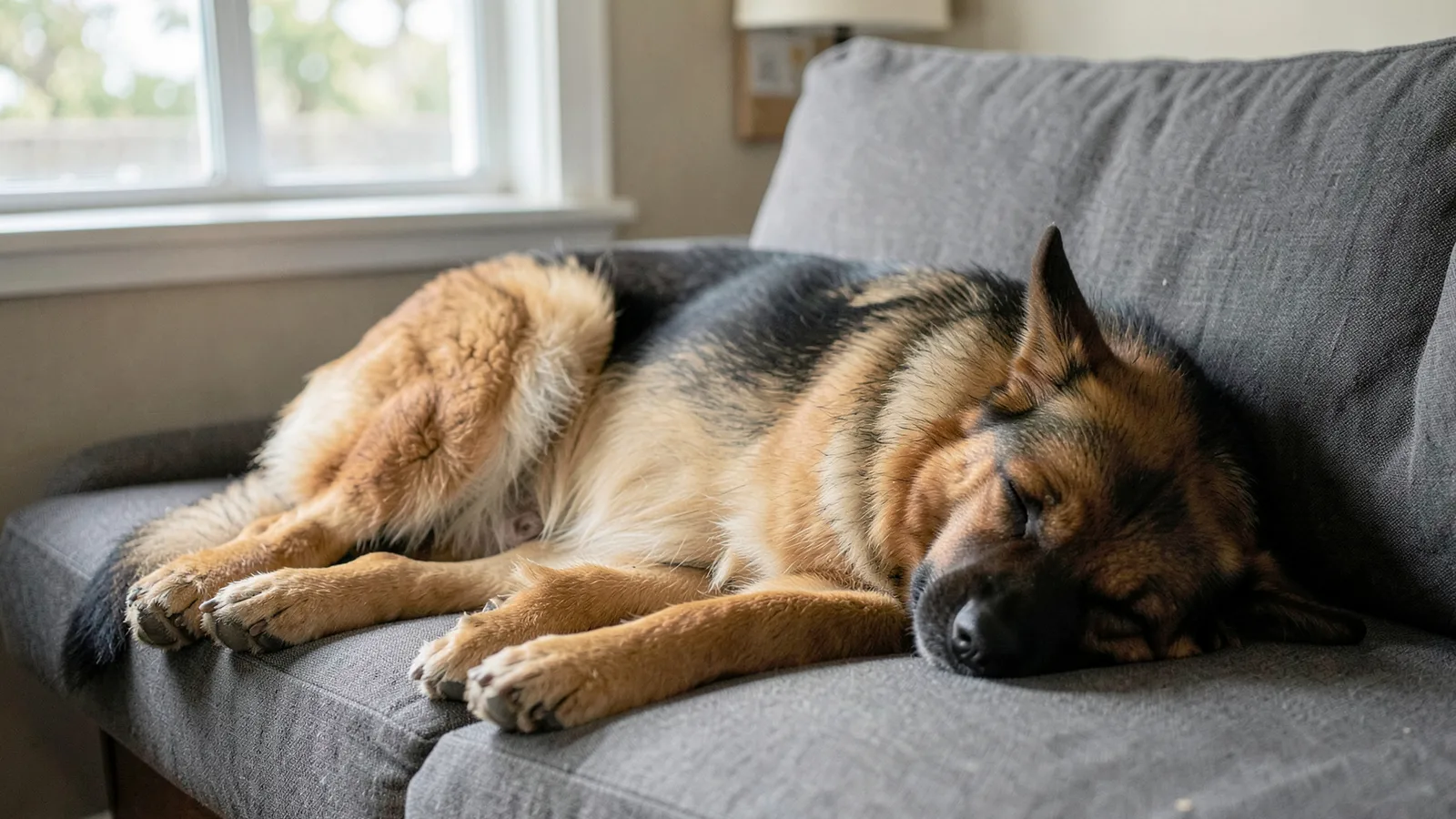
Wait until your dog is asleep or resting quietly in a cool room, not after a walk or while excited. Count each rise of the chest (one rise and fall is one breath) for 30 seconds and double it, or count for a full minute.
Most healthy dogs breathe fewer than 30 times a minute while asleep, and often far fewer. A sleeping rate that is consistently above 30, or that is climbing from what is normal for your dog, is worth a call to your vet. For dogs with known heart disease, vets often ask owners to track this number at home because a rising resting rate can be an early sign of fluid building up in the lungs.
Breathing signs that are an emergency
Go to an emergency vet now if your dog’s gums or tongue look blue, grey or very pale. Go too if they are struggling to breathe, with the belly working hard, elbows held out from the chest or the neck stretched forward, if they are breathing with the mouth open while at rest and cool, if they cannot settle or lie down, or if they collapse.
Flat-faced breeds such as Bulldogs, Pugs and French Bulldogs have narrower airways and overheat easily, so loud, laboured breathing in warm weather can become an emergency faster in these dogs.
What different coughs can mean
Describing the cough accurately helps your vet. Note when it happens (at night, after exercise, after drinking, when pulling on the lead), whether it ends with a gag or retch, and whether anything comes up. A short video on your phone is often the most useful thing you can bring.
| What it sounds like | Common causes | Notes |
|---|---|---|
| Harsh, dry hack, often ending in a gag | Kennel cough (infectious tracheobronchitis) | Usually after kennels, daycare or dog parks |
| Goose-like "honk" | Collapsing trachea | Common in small breeds, worse with excitement or a collar |
| Soft, moist cough with tiredness or fever | Pneumonia or bronchitis | Needs a vet promptly |
| Cough at rest or at night, with fast breathing | Heart disease | Especially in older dogs with a known murmur |
| Loud snorting inhalations in short bursts | Reverse sneezing | Usually harmless and passes in under a minute |
Common questions
Is it normal for my dog to breathe fast while sleeping?
Brief fast breathing during dreams, often with twitching paws, is normal and settles within a minute or so. A sleeping breathing rate that stays above about 30 breaths a minute, or one that is rising over days, is not normal and should be checked by a vet.
When should I worry about my dog coughing?
Call a vet if the cough lasts more than a few days, is getting worse, comes with fast or difficult breathing, lethargy, fever or loss of appetite, or if your dog is a puppy, a senior or has heart disease. Any cough with blue or grey gums, or real difficulty breathing, is an emergency.
Can I give my dog human cough medicine?
Not without a vet’s advice. Many human cough and cold products contain decongestants, painkillers or xylitol that are toxic to dogs, and suppressing a cough can be the wrong treatment for some causes. Your vet can tell you whether a cough suppressant is appropriate and which one.
Reviewed by Winzah, Editor, on . How we research and check articles.