The short answer
Fast breathing and panting are normal after exercise, in the heat, when excited and during dreams. What is not normal is fast or heavy breathing while your dog is resting quietly or asleep in a cool room. Most healthy dogs take 15 to 30 breaths a minute when resting or sleeping. A resting rate that stays above about 30 to 35, or breathing that looks like hard work, needs a vet, urgently if the gums look pale, blue or grey.
Call a vet now if your dog has
- Blue, grey, purple or very pale gums or tongue
- Struggling to breathe: belly heaving, neck stretched out, elbows held away from the chest
- Open-mouth breathing while cool and resting, or being unable to settle or lie down
- Collapse, fainting or severe weakness
- Heavy panting with a hot body after heat or exercise that does not settle within minutes
- Noisy, high-pitched breathing or choking
Dogs breathe fast for lots of perfectly ordinary reasons. They pant to cool down, they puff after a game of fetch, and they twitch and breathe quickly through vivid dreams. So the question is never just “is my dog breathing fast?” It is when and how.
The single most useful thing you can do is count your dog’s breathing while they are resting. It takes one minute, it gives you and your vet a real number to work with, and it is the same measurement veterinary cardiologists ask owners to track at home.
Normal panting versus abnormal fast breathing
Dogs do not sweat much, so panting (fast, shallow breaths with the mouth open and tongue out) is their main way of losing heat. It is normal:
- during and after exercise or play
- on a warm day or in a hot car or room
- when excited, such as when visitors arrive
- during car journeys or vet visits, from stress
It should settle within a few minutes once the trigger is gone and your dog is cool and calm.
Abnormal fast breathing is breathing that is faster or harder than it should be at rest (lying quietly in a cool room, or asleep) when there is no obvious reason for it. Other warning features include breathing that looks like effort, with the belly pushing on each breath, noisy breathing, flared nostrils, and a dog that will not lie down, or sits with elbows turned out and neck stretched forward.
How to count your dog’s breathing rate
- Wait until your dog is asleep or resting calmly in a cool room, not straight after a walk, a meal or excitement.
- Watch the chest or belly. One rise and one fall is one breath.
- Count for 30 seconds and multiply by two, or count for a full minute. A phone timer helps.
- Repeat on a few different days to learn what is normal for your dog, and write the numbers down.
Most healthy dogs breathe 15 to 30 times a minute while resting or asleep, and many breathe more slowly. A resting rate that is consistently above about 30 to 35, or one that keeps rising over several days, is a reason to call your vet. For dogs with known heart disease, vets often give owners a specific number to watch for.
Video it
If the breathing looks strange, take a 30-second video while your dog is resting. Breathing patterns are hard to describe and easy to show, and your vet will find it far more useful than a description.
Common causes of fast or heavy breathing
Heat and heatstroke. Panting is normal in heat, but a dog that keeps panting heavily, drools thickly, has very red gums, stumbles or seems confused after heat or exercise may have heatstroke, which is an emergency. Move them somewhere cool, wet their coat with cool (not ice-cold) water, and go to a vet immediately.
Pain, fear and nausea. Dogs often hide pain, and panting at rest may be one of the few visible signs. Look for restlessness, trembling, reluctance to move, hiding or guarding a part of the body.
Heart disease. When the heart is not pumping efficiently, fluid can build up in or around the lungs. A rising resting breathing rate is often one of the earliest signs that heart disease is progressing to heart failure, sometimes before coughing or tiring easily appear. It is most common in older small-breed dogs with a heart murmur and in large breeds prone to dilated cardiomyopathy.
Lung and airway problems. Pneumonia, bronchitis, kennel cough complicated by infection, fluid or air around the lungs, lung tumours and inhaled objects can all cause fast breathing, often with coughing, lethargy or fever. See kennel cough symptoms and dog coughing and gagging.
Upper airway problems. Flat-faced breeds such as Bulldogs, French Bulldogs and Pugs have narrowed airways and often breathe noisily. They overheat and tire quickly. Older large-breed dogs, especially Labradors, can develop laryngeal paralysis, which causes loud, raspy breathing that worsens with heat and exercise.
Anemia. With too few red blood cells, the body tries to get more oxygen by breathing faster. Pale gums are the giveaway. Causes include bleeding and some poisons. See can dogs eat onions.
Other illnesses and medicines. Fever, Cushing’s disease (which often causes excessive panting), some poisonings and certain medicines, including steroids, can all increase breathing rate.
Keep a simple breathing log
If your dog is older, has a heart murmur or has had breathing problems before, a breathing log is one of the most useful things you can bring to the vet. Once or twice a week, and daily if your vet asks, count your dog’s sleeping breaths for a minute and write down the date, the number and anything unusual, such as a cough or a reluctant walk. A gradual rise from your dog’s usual number, even while it is still under 30, is worth mentioning, because it can show a change before any other sign appears.
When to see a vet
| What you notice | What to do |
|---|---|
| Panting after exercise or heat that settles within minutes | Normal, no action |
| Brief fast breathing during dreams | Normal, no action |
| Resting or sleeping rate above about 30 to 35, but dog otherwise well | Call your vet and book a check |
| Fast breathing at rest plus coughing, tiredness or poor appetite | See a vet today |
| Breathing looks effortful, noisy or your dog cannot settle | See a vet urgently |
| Blue, grey or very pale gums, or collapse | Emergency vet now |
What the vet will do
Your vet will listen carefully to the heart and lungs, check gum colour and temperature, and ask about coughing, exercise tolerance and how long the fast breathing has been happening. Depending on what they find, they may recommend chest X-rays, an ultrasound of the heart, blood tests or measurement of oxygen levels. A dog in respiratory distress is usually given oxygen first and examined once they are more stable.
Treatment depends on the cause: for example, medicines that remove excess fluid in heart failure, antibiotics for some types of pneumonia, pain relief for a painful dog, or cooling for heatstroke. For a wider look at breathing and coughing problems, visit our breathing and cough section.
Common questions
How many breaths per minute is normal for a sleeping dog?
Most healthy dogs take between 15 and 30 breaths a minute when resting calmly or asleep, and many take fewer. A sleeping or resting rate consistently above about 30 to 35 breaths per minute is worth discussing with your vet, especially in an older dog or one with a heart murmur.
Why is my dog breathing fast while sleeping?
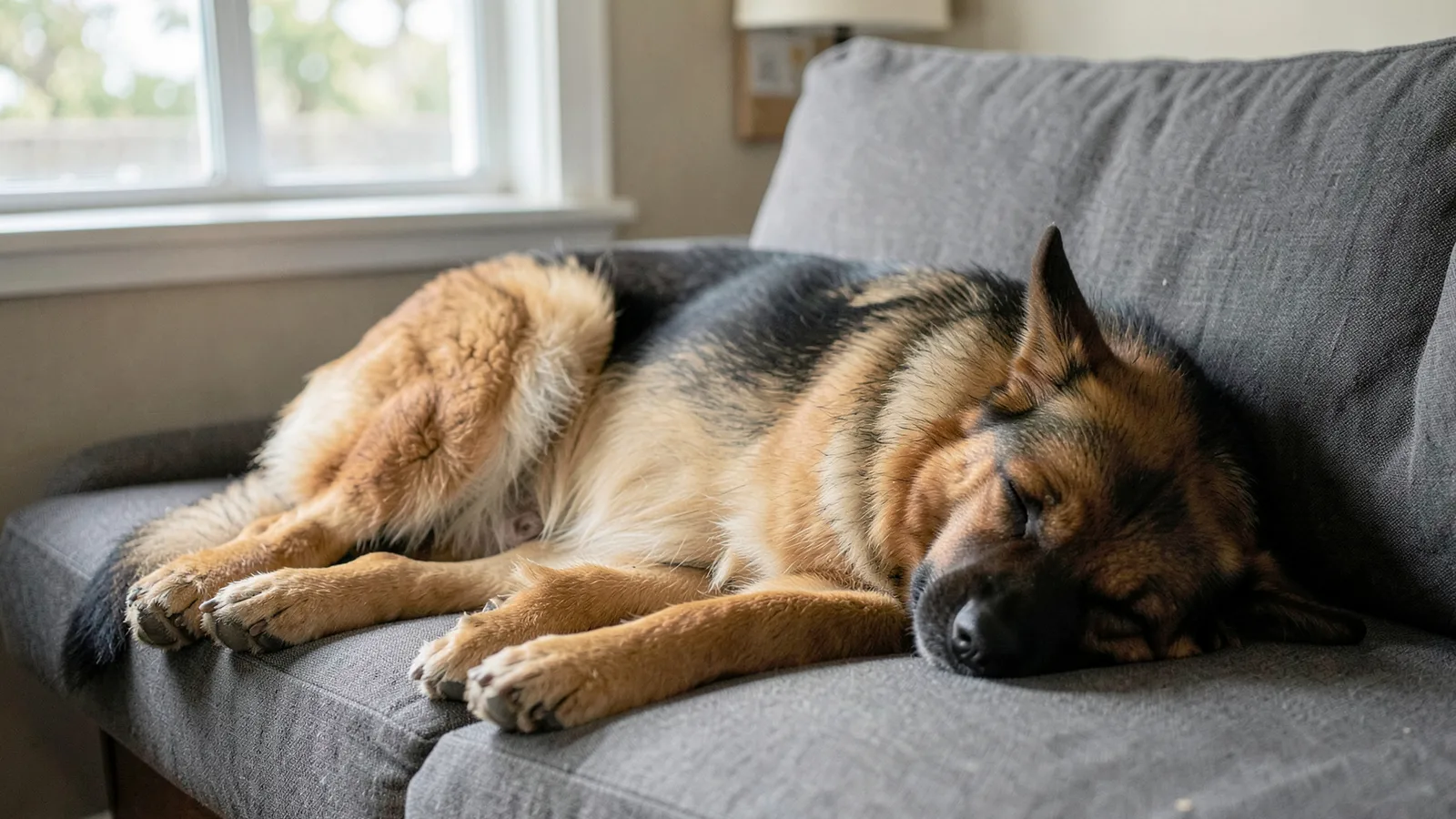
Short bursts of fast breathing during sleep, often with twitching paws or soft noises, are usually dreaming and settle within a minute or so. Fast breathing that continues throughout sleep, or a resting rate that is creeping up over days, can be an early sign of heart or lung disease and should be checked.
Is it normal for puppies to breathe fast?
Puppies do breathe faster than adult dogs and can breathe very quickly during dream sleep. A puppy that breathes fast while resting and also seems tired, coughs, has a runny nose or is not eating normally should see a vet, because young puppies can develop pneumonia quickly.
Can stress or pain make a dog breathe fast?
Yes. Pain, fear, anxiety and nausea all commonly cause panting and fast breathing, even in a cool room. If your dog is panting at rest and also seems restless, is hiding, is reluctant to move or is guarding part of the body, pain is a likely cause and a vet should examine them.
Sources
- Home Breathing Rate Evaluation, VCA Animal Hospitals
- Recognizing and responding to canine respiratory distress, Cornell Richard P. Riney Canine Health Center
- Monitoring Heart Disease Treatment at Home, Cummings School of Veterinary Medicine at Tufts University
This article is general information to help you decide what to do next. It is not a diagnosis and is not a substitute for examination by a veterinarian. If you are worried about your dog, call your vet.
Reviewed by Winzah, Editor, on . How we research and check articles.