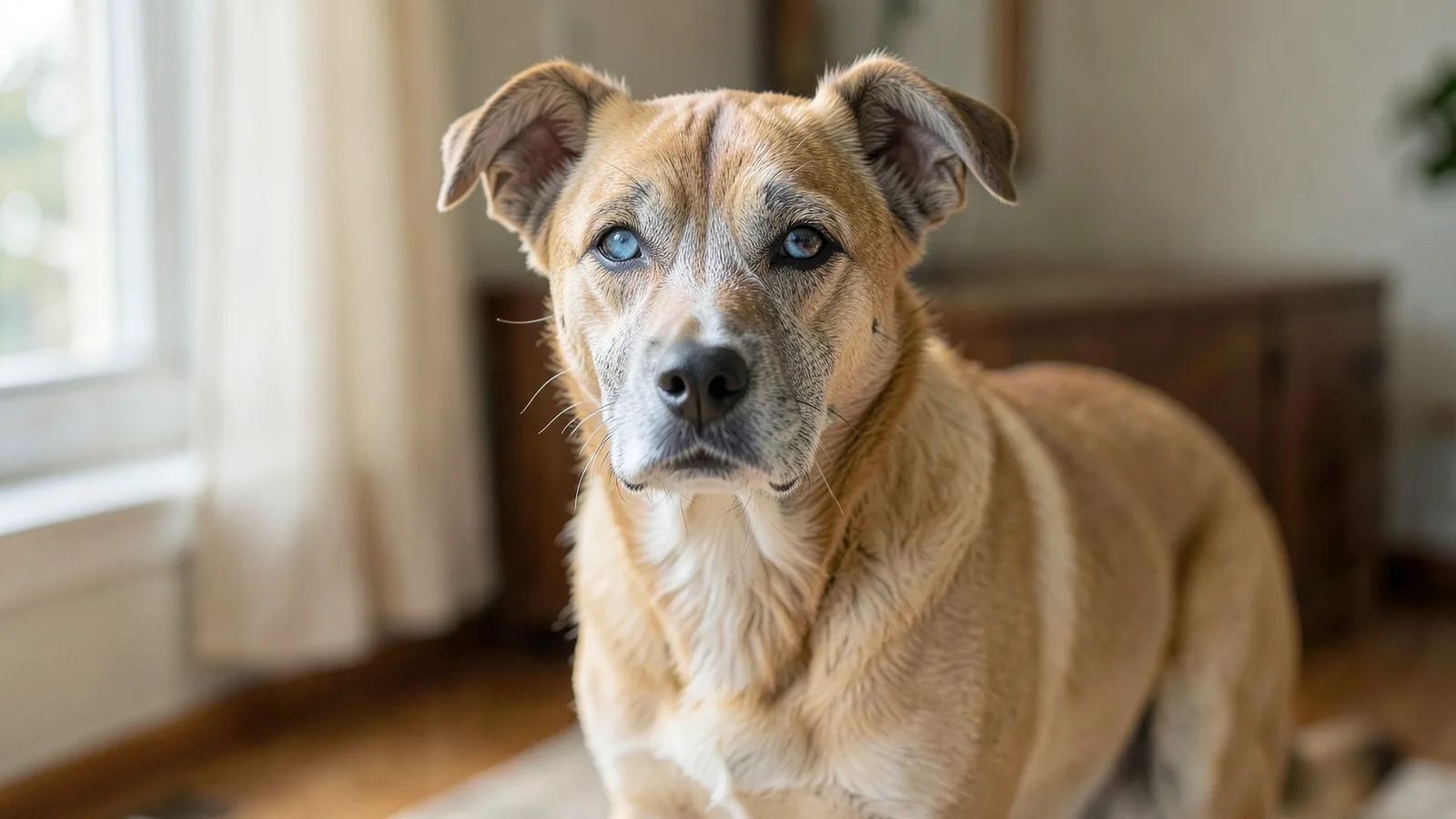
The short answer
Slowly developing cloudiness in both eyes of an older dog is often nuclear sclerosis, a normal bluish haze that doesn't cause blindness. Cataracts look whiter and denser and do block vision. But a cloudy eye that appears suddenly, looks red or painful, or shows up in a young dog can mean glaucoma, an ulcer or uveitis. Those can cost your dog its sight within days, so book a vet visit the same day.
Call a vet now if your dog has
- The eye turned cloudy or blue-gray over hours or a few days
- Squinting, holding the eye shut, or pawing and rubbing at it
- A red eye, or an eye that looks swollen, bulging or larger than the other
- A cloudy eye in a young dog, or cloudiness after an injury
- Sudden bumping into furniture, hesitating on stairs or other new vision trouble
- Thick yellow or green discharge along with the cloudiness
You glance at your dog in good light and something looks off. One eye, or both, has a milky, bluish or gray haze that wasn't there before. It's a worrying moment.
Sometimes it's nothing more than normal aging. Other times it's an eye emergency. The trick is knowing which one you're looking at, and how fast it appeared matters as much as how it looks.
When cloudy eyes are an emergency
Start here, because it decides everything else.
See a vet the same day if the cloudiness came on suddenly, if the eye is red or painful, or if your dog is young. Don't wait a few days to see whether it clears up. Glaucoma, corneal ulcers and uveitis can all make an eye look cloudy, and each one can damage sight quickly.
Go the same day if you see any of these:
- cloudiness that appeared over hours or a few days
- squinting, blinking a lot, holding the eye shut or pawing at it
- a red eye, or one that looks swollen, bulging or bigger than the other
- thick yellow or green discharge
- cloudiness in a young dog, or after any injury
- bumping into things or refusing stairs
Slow, painless haze in both eyes of an older dog is the only version where waiting a little is reasonable. Even then, mention it at the next vet visit.
Nuclear sclerosis vs cataracts
These two are the most common reasons an older dog's eyes look cloudy, and people mix them up all the time. They aren't the same thing.
Nuclear sclerosis (vets also call it lenticular sclerosis) is a normal change with age. The central tissue of the lens thickens and hardens as dogs age, and it shows as a bluish, transparent haze. One veterinary source estimates it affects about half of dogs over 9 years old and nearly all dogs over 13. It doesn't cause significant vision loss, and it needs no treatment.
A cataract is different. The lens itself becomes cloudy or opaque, and that blocks light from reaching the retina at the back of the eye. Vision can drop a little or disappear completely.
| Nuclear sclerosis | Cataract | |
|---|---|---|
| What it is | Normal hardening of the lens with age | Cloudy or opaque lens that blocks light |
| Color | Bluish or gray haze | White and opaque |
| Typical age | Middle-aged to senior dogs | Any age, often inherited |
| Both eyes | Usually | Usually, but can start in one |
| Vision | Rarely affects sight | Reduces vision, can cause blindness |
| Treatment | None needed, monitor | Surgery can restore sight |
A few extra points help:
- Nuclear sclerosis often looks more obvious from the side than head-on. Your vet can still see the retina through it. Through a dense cataract, they can't.
- Vets keep an eye on a hazy lens over time, because a cataract can develop later.
- You can't reliably tell them apart by eye at home. Only a vet can, and an eye exam is quick.
What to know about cataracts
Cataracts are most often inherited, and they can also follow eye injuries, diabetes or aging. Breeds with a higher risk include American Cocker Spaniels, Labrador Retrievers, Poodles, Boston Terriers and Welsh Springer Spaniels. Some dogs have them at birth, while others develop them anywhere from 6 months to several years old.
How much your dog sees depends on how much of the lens is affected. A cataract covering under about 30% of the lens rarely causes a visible problem. At around 60%, vision impairment becomes noticeable. A fully opaque lens means blindness in that eye.
Diabetes deserves a special mention. It's a well-known cause of cataracts in dogs, and diabetic dogs can develop them fast. If your diabetic dog's eyes turn hazy or white, tell your vet promptly.
Surgery to remove the lens is the only real fix, and it's done by a veterinary ophthalmologist. It works best when it's done early, before the cataract is fully mature and before inflammation sets in. No eye drops reliably stop a cataract from progressing. Your vet will also watch for complications such as glaucoma after surgery.
Haze in an older dog, but the eye is calm and white
If your senior dog has a slow, even haze in both eyes, no redness, no squinting and normal behavior, nuclear sclerosis is the likely cause. Take a photo now in even light. It gives your vet something to compare against, and it helps you spot change over time.
Other causes of a cloudy eye
Most of these are less benign than aging. The detail below is brief, because each one deserves its own vet visit.
Glaucoma
Glaucoma is raised pressure inside the eye. The cornea can turn cloudy or bluish, and the eye may look red or bulging. Dogs often squint, rub at the eye, eat less and seem tired. Acute glaucoma is a true emergency, because blindness can come on very quickly unless the pressure is brought down. Breeds at higher risk include Cocker Spaniels, Poodles, Beagles, Siberian Huskies, Shih Tzus and Dalmatians. If one eye has glaucoma, the other is at high risk too, so your vet will want to monitor both.
Corneal ulcers and injury
The cornea is the clear window on the front of the eye. A scratch or erosion there is painful, and the eye can look cloudy as fluid builds up in the layers of the cornea. Dogs squint, rub and tear up, and the eye is often red. The most common cause is trauma, such as a cat scratch, a stick, or rubbing on a carpet. Chemical burns from shampoo can do it too. Flat-faced breeds like Pugs and Bulldogs are at higher risk.
Ulcers need prompt care. If one erodes through to the deepest layer of the cornea, it becomes a serious problem that can end in blindness. Shallow ulcers usually heal in three to five days with antibiotic drops and pain relief, and your dog will need a cone to stop rubbing.
Uveitis
Uveitis is inflammation inside the eye. It causes severe pain, intense redness, squinting, light sensitivity and often a cloudy look. It has many triggers, including infections, immune problems, trauma, tumors and metabolic disease, so your vet may look for a cause elsewhere in the body. Treatment is urgent. Most cases improve within about 24 hours of proper treatment, but untreated uveitis can lead to permanent blindness.
Dry eye
Dry eye (keratoconjunctivitis sicca) happens when the eyes don't make enough good-quality tears. The cornea gets dull and irritated, and dogs have painful red eyes with thick, sticky discharge. It usually affects both eyes. Cavalier King Charles Spaniels, English Bulldogs, Lhasa Apsos, Pugs, Shih Tzus and West Highland White Terriers are more prone, though any dog can get it. Treatment is daily tear-stimulating medication, usually for life. Left alone, dry eye can lead to ulcers and infection.
Corneal dystrophy
Corneal dystrophy is an inherited condition where gray, white or silvery patches appear on the cornea. It's seen in breeds such as Airedales, Cocker Spaniels, Cavalier King Charles Spaniels, Samoyeds and Weimaraners. Most dogs feel no discomfort and never lose vision. Some types, though, can cause squinting or painful ulcers, so it still needs a vet's confirmation. There's no cure, and treatment focuses on any ulcers that develop.
A cloudy eye in a young dog
An older dog's lens clouding up is expected. A young dog's isn't, and it deserves more urgency, not less.
If you're wondering about a young dog cloudy eye suddenly appearing, the likely suspects are an ulcer, an injury, uveitis, glaucoma or an inherited cataract. A puppy or young adult that plays rough, runs through brush or lives with a cat is at real risk of a scratched cornea. Don't assume it'll heal. Book a vet visit the same day, and keep your dog from rubbing the eye on the way there.
Is my dog's eye opaque or just hazy?
Owners often describe the same thing in different ways. A dog eye opaque and white usually points to a cataract or a dense cornea problem. A thin, even, bluish veil suggests nuclear sclerosis. Neither description is a diagnosis. What your vet cares about is how fast it changed, whether the eye hurts, and whether your dog can still see.
How to tell if your dog can still see
Dogs with failing sight are often good at hiding it, especially in a familiar home. Watch for:
- bumping into furniture or doorframes, especially if you've moved things
- hesitating at stairs, curbs or the edge of the sofa
- startling when you touch them, because they didn't see you coming
- missing a thrown toy or a treat held in front of the nose
- staying close to you on walks, or reluctance to go out in dim light
Vets use simple exam tests to check sight, so don't rely on home tricks alone. Dogs often compensate well with hearing and smell, so vision loss can be further along than it looks.
Helping a dog with poor vision at home
Once your vet has found the cause and treated what can be treated, a dog with reduced sight can still live a full life.
- Keep the layout the same. Don't rearrange furniture or leave things in walkways.
- Use scent and sound. Put a different scent or textured mat at stairs and doorways, and talk as you approach so you don't startle them.
- Block hazards. Gate stairs and keep pool edges and balconies off limits.
- Use a leash in new places. Keep off-leash time to areas your dog knows well.
- Protect the eyes. Keep long hair trimmed around the eyes, and use a cone if your vet advises one.
- Keep up the checkups. Cataracts and glaucoma can change over time.
What the vet will do
Your vet will examine the eye with a light and magnification. Common tests include a fluorescein stain that makes corneal ulcers glow green, a tear test for dry eye, and a pressure reading to check for glaucoma or uveitis. If a cataract looks like a surgical candidate, you'll be referred to a veterinary ophthalmologist. For related redness and discharge, see our guide to red eyes in dogs. A red lump in the corner of the eye is a different issue, covered in cherry eye in dogs.
Some cloudy eyes link to illness elsewhere in the body, such as diabetes or immune disease. Our conditions and diseases section has more on those, and the ears and eyes section collects every eye guide.
When to see a vet
| What you see | What to do |
|---|---|
| Sudden cloudiness, or a cloudy eye that's red or painful | Same day, treat as an emergency |
| Cloudy eye in a young dog | Same day |
| Cloudy eye after an injury or chemical exposure | Same day |
| Bulging or enlarged eye, or sudden vision loss | Emergency, go now |
| Slow, even haze in both eyes of a calm senior dog | Mention at the next checkup |
| White, dense look in the pupil of a diabetic dog | Call your vet within a day or two |
When in doubt, treat a cloudy eye as urgent. A vet exam takes minutes, and a missed ulcer or glaucoma can take an eye.
Common questions
Is nuclear sclerosis the same as a cataract?
No. Nuclear sclerosis is a normal age-related hardening of the lens that looks like a bluish haze and doesn't significantly affect sight. A cataract is a cloudy or opaque lens that blocks light from reaching the retina and can lead to blindness. Only a vet can tell them apart for sure.
At what age do dogs' eyes get cloudy?
Nuclear sclerosis usually shows up in middle-aged to senior dogs. One veterinary source estimates it affects about half of dogs over 9 years old and nearly all dogs over 13. Cloudy eyes in a young dog aren't expected aging and should be checked by a vet promptly.
Can cloudy eyes in dogs go away on their own?
Nuclear sclerosis doesn't go away, but it doesn't need treatment either. Cloudiness from an ulcer, uveitis or glaucoma won't safely clear by itself and can get worse quickly. Don't wait to see if a new cloudy eye improves. Have a vet look at it.
Can cataracts be treated?
Yes. Surgery by a veterinary ophthalmologist to remove the cloudy lens can restore vision, and it works best when done before the cataract is fully mature and before inflammation develops. No eye drops reliably stop cataracts from progressing.
Can diabetes make my dog's eyes cloudy?
Yes. Diabetes is a recognized cause of cataracts in dogs, and they can form quickly. If your diabetic dog's eyes turn white or hazy, tell your vet, since the lens may need monitoring or surgery.
Sources
- Cloudy Eyes in Dogs, American Kennel Club
- Lenticular Sclerosis in Dogs, VCA Animal Hospitals
- Cataracts in Dogs, VCA Animal Hospitals
- Disorders of the Lens in Dogs, Merck Veterinary Manual
- Glaucoma in Dogs, VCA Animal Hospitals
- Corneal Ulcers in Dogs, VCA Animal Hospitals
- Uveitis in Dogs, VCA Animal Hospitals
- Dry Eye (Keratoconjunctivitis sicca), American College of Veterinary Ophthalmologists
- Corneal Dystrophy in Dogs, VCA Animal Hospitals
This article is general information to help you decide what to do next. It is not a diagnosis and is not a substitute for examination by a veterinarian. If you are worried about your dog, call your vet.
Reviewed by Winzah, Editor, on . How we research and check articles.
Related articles
Dog Ear Infections: Signs, Causes and When to See a Vet
How to tell if your dog has an ear infection, what brown discharge and a bad smell mean, why infections keep coming back, and how vets treat them.

What Is Cherry Eye in Puppies?
What cherry eye is in puppies, why it often appears before age one, which breeds are most at risk, and why a vet should replace the gland instead of removing it.
Ear Mites in Dogs: Signs, Treatment and What to Do
How to spot ear mites in dogs, how they differ from an ear infection or plain wax, what treatment involves, and why every pet in the house needs treating together.