The short answer
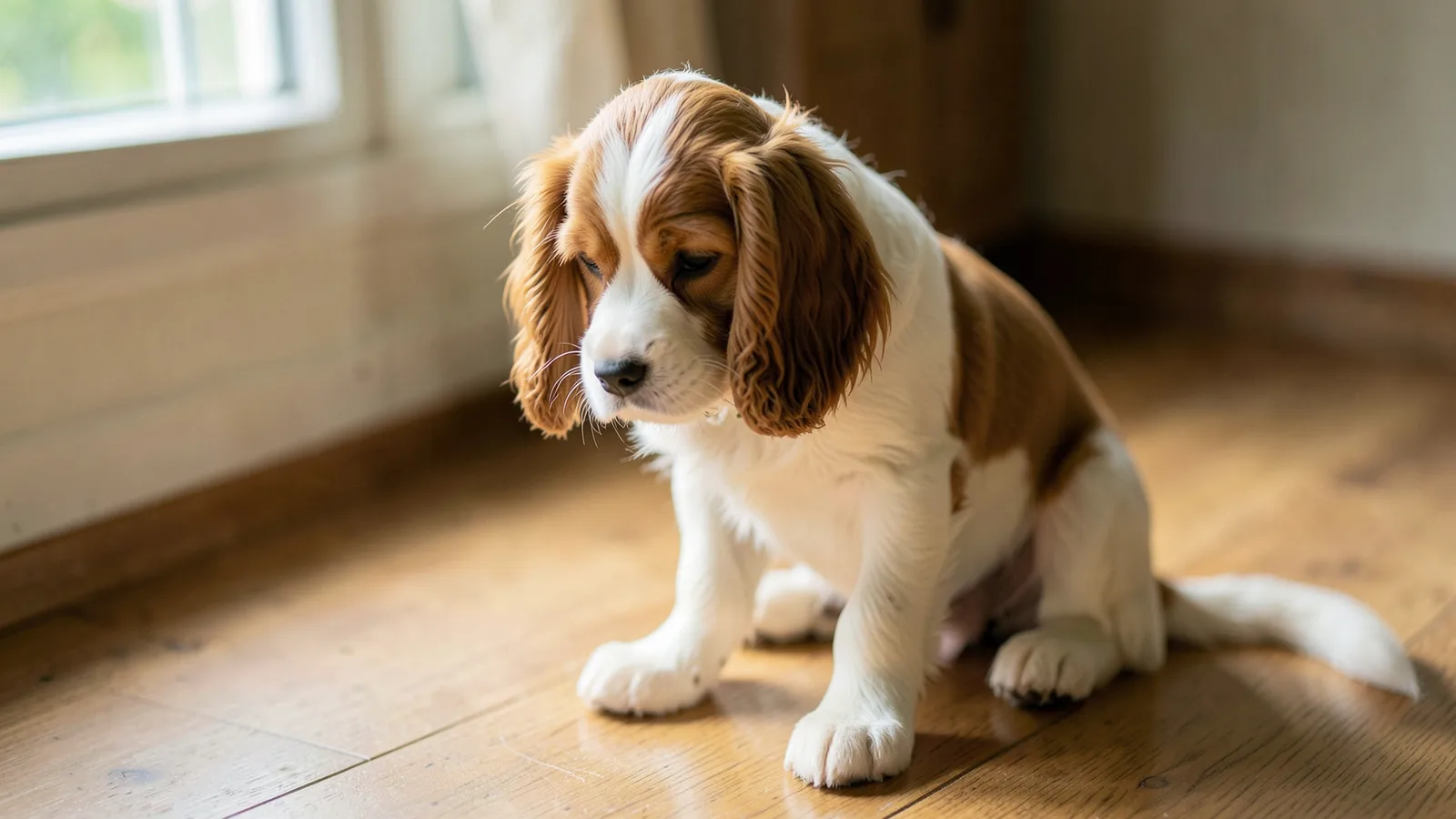
Cherry eye in puppies is a prolapsed third eyelid gland that pops out as a red or pink lump in the inner corner of the eye. It's most common in young dogs, and about three-quarters of cases happen before age one. Bulldogs, Beagles, Boxers, Cocker Spaniels and Shih Tzus are at higher risk. The gland should be surgically replaced, not removed, because it makes a large share of the tears and removal risks dry eye.
Call a vet now if your dog has
- Squinting, holding the eye shut, or constant pawing at the eye
- A cloudy, blue-grey or bulging eye
- A lump that looks dry, torn or bleeding
- Thick yellow or green discharge
- A puppy that is quiet, off food, or in obvious pain
One morning you notice a red, glossy lump in the corner of your puppy's eye. It looks like a small cherry. Your puppy seems fine, but you're not.
This is cherry eye, and it's mostly a young dog's condition. It looks alarming but it has a clear fix. Here's what's going on and what to do next.
What is cherry eye in puppies?
Dogs have a third eyelid, tucked inside the lower lid in the inner corner. It sweeps across the eye like a windshield wiper. A gland attached to it produces a large share of the tears that keep the eye moist and clean.
The gland is held in place by a small fibrous anchor. In cherry eye, that anchor is weak, and the gland slips out and rolls over the edge of the lid. Vets call it a prolapsed third eyelid gland. Owners call it cherry eye because of how it looks.
Why puppies get it
The anchor is still developing in a young dog, and in some breeds it's weaker from the start. AKC says the exact cause is unknown, though there's probably a genetic part, and head shape may play a role. Allergies or irritation can swell the gland and make it more likely to pop out.
Imagine a button on a shirt with a loose thread. Every tug makes it looser, until it comes off.
How common is it in young dogs?
Very. AKC reports that most cases happen in dogs under two years old, and around 75 percent before the first birthday. If your puppy is going to get it, you'll often see it in the first year.
Signs of cherry eye in a puppy
- A smooth, red or pink lump in the inner corner of the eye, near the nose
- A lump that comes and goes at first, then stays
- Watery or sticky discharge
- Pawing or rubbing at the eye
- Redness around the eye
It may affect one eye first. Many dogs end up with the other eye affected later, so it's worth watching both.
Breeds most at risk
| Breed | Why it matters |
|---|---|
| English Bulldog | Shallow eye sockets and loose tissue |
| Beagle | Named by VCA and AKC as predisposed |
| Cocker Spaniel | Predisposed, and also prone to dry eye |
| Boxer | Listed by AKC |
| Shih Tzu | Flat-faced, with prominent eyes |
| Great Dane, Mastiff, Newfoundland | Large breeds with loose facial tissue |
VCA notes that flat-faced breeds in general are more susceptible. AKC says purebred and flat-faced dogs have higher rates. If you have a puppy from one of these breeds, check their eyes regularly.
English Bulldog puppies
Bulldogs are the best-known group. If you own one, make it a habit to look at both inner eye corners each week. Catching a prolapse early gives your vet more options.
Is it painful?
The lump itself isn't often very painful. But it irritates the eye, and puppies are great at making things worse. They rub with a paw, rub on carpet, or scratch with sharp little nails. That can scratch the surface of the eye or injure the gland.
Squinting changes everything
A puppy with cherry eye who's also squinting, holding the eye shut or crying has a different problem too. It might be a scratched cornea. Treat it as a same-day vet visit.
Why surgery is the answer
Years ago, vets simply removed the gland. It seemed easy. But the gland makes up to half of the watery part of the tear film, and without it dogs are much more likely to develop dry eye.
VCA describes dry eye as red, painful eyes with squinting, blinking and thick yellow discharge. It often needs lifelong drops. So the current advice from both VCA and AKC is clear: don't remove the gland. Replace it.
What the surgery involves
AKC describes making a little pocket from nearby tissue and stitching the gland back in with absorbable sutures. Your vet picks the technique. For a tricky case, or if the gland keeps coming out, a veterinary ophthalmologist is the right specialist.
Before surgery
You might wait a few days. Meanwhile:
- Keep your puppy from rubbing, using a cone if your vet says so
- Keep the gland moist with the ointment or gel your vet recommends (VCA mentions artificial tear ointment, AKC a gel lubricant)
- Don't try to push it back in
- Check the eye each morning and night, and note any change
Recovery and common mistakes
Most dogs recover within a few weeks. Expect a cone, eye drops, and a recheck. Some redness and swelling right after surgery is common. Call your vet if swelling worsens, the eye weeps heavily, or the gland pops out again.
A re-prolapse happens in a minority of cases. VCA gives 5 to 20 percent, and AKC 5 to 10 percent. Many dogs also develop cherry eye in the other eye. Don't be discouraged if that happens, because the same treatment works.
What to expect at the vet
Your vet will look at the eye and confirm that the lump is the third eyelid gland. They'll also check the surface of the eye for scratches, since puppies rub at it. They'll talk through surgery, timing and aftercare.
Puppies need anesthesia for the operation. Ask about pre-op checks and about the clinic's experience with your breed. Flat-faced breeds like Bulldogs have short airways, so they need extra care under anesthesia.
Questions worth asking
- How soon should the surgery be done?
- Which technique do you use, and how often does it need repeating?
- Should my puppy see an eye specialist?
- What should I put on the eye while we wait?
- What signs after surgery should make me call you?
Common mistakes with a puppy's cherry eye
Owners mean well, but a few habits make things worse.
Waiting to see if it goes away
Some glands pop in and out for a while. That can look like it's healing. It isn't. Every episode exposes the gland to drying and irritation.
Pushing the lump back in
It might work for a moment, but the weak anchor means it comes straight out again. You also risk hurting the eye. Leave it to the vet.
Asking for the gland to be cut out
It sounds faster and cheaper. But the long-term risk of dry eye is why vets now advise against it. Ask for replacement surgery, or a referral to someone who does it often.
Using human eye drops
Redness-relieving drops and steroid products can cause harm, especially if the eye surface is scratched. Use only what your vet gives you.
Cherry eye and your puppy's future eye health
Once the gland is back in place, most puppies go on to have normal, comfortable eyes. The goal of surgery is to keep the tear supply intact for life. That's the reason vets avoid removal, even though it was once common.
Keep an eye on the other side as your puppy grows. Because many dogs eventually develop cherry eye in the second eye, a quick look at both inner corners each week is a habit worth building. If you ever see squinting, thick yellow discharge or a dull, dry-looking surface, call your vet, since those can be signs of dry eye or an ulcer.
Regular vet checkups through the first year also give your vet a chance to spot early changes before they become a bigger problem.
Cherry eye or another red-eye problem?
A red lump in the inner corner is the classic sign. But a red eye without a lump can mean conjunctivitis, a scratch or an infection. Puppies also get eye discharge from colds and other illness. Our guide to red eyes in dogs helps you sort the possibilities, and our main page on cherry eye in dogs covers the adult version in more detail.
Tips for new puppy owners
- Ask the breeder whether cherry eye runs in the line
- Learn what a healthy inner eye corner looks like so you notice a change
- Keep sharp nails trimmed
- Don't wait. Book a visit as soon as you see a lump
When to see a vet
Puppies change quickly, so it's better to ask early than to wait.
Book a visit within a day or two for any red lump in the corner of your puppy's eye. It's not a middle-of-the-night emergency, but fast treatment protects the gland and the eye.
Go the same day if your puppy is squinting, holding the eye shut, has a cloudy or bulging eye, heavy discharge, or a lump that looks dry, torn or bleeding. For more guides, visit our ears and eyes section.
Common questions
At what age do puppies get cherry eye?
Usually when they're young. AKC reports that most cases occur in dogs under two years old, with about 75 percent happening before age one. Some puppies show it as early as a few months old.
Is cherry eye an emergency in a puppy?
Not usually, but it shouldn't wait for long. Book a vet visit within a day or two. See a vet the same day if your puppy is squinting, holding the eye shut, or the eye looks cloudy or damaged.
Can a puppy outgrow cherry eye?
Don't count on it. The gland can pop in and out at first, but the weak attachment doesn't usually strengthen on its own. Treatment is recommended, because an exposed gland can dry out and get damaged.
Why can't the vet just remove the gland?
The gland makes up to half of the watery part of the tear film. Removing it makes dry eye much more likely, and that means a lifetime of treatment. Vets now replace the gland instead.
Sources
- Cherry Eye in Dogs, VCA Animal Hospitals
- Cherry Eye in Dogs: Signs, Symptoms, Treatments, American Kennel Club
- Keratoconjunctivitis Sicca (Dry Eye) in Dogs, VCA Animal Hospitals
This article is general information to help you decide what to do next. It is not a diagnosis and is not a substitute for examination by a veterinarian. If you are worried about your dog, call your vet.
Reviewed by Winzah, Editor, on . How we research and check articles.
Related articles
Ear Mites in Dogs: Signs, Treatment and What to Do
How to spot ear mites in dogs, how they differ from an ear infection or plain wax, what treatment involves, and why every pet in the house needs treating together.

How to Treat Puppy Ear Mites
Ear mites in puppies cause itchy ears and dark, crumbly debris. Here's how to spot them, why puppies need a vet's dosing, and how to treat the whole household.
Cherry Eye in Dogs: What It Is and How It's Treated
What cherry eye is, which breeds get it, why surgery to put the gland back is the standard treatment, and what recovery looks like for your dog.