Chocolate Poisoning in Dogs: Symptoms, Toxic Amounts and What to Do
By Winzah
6 min read
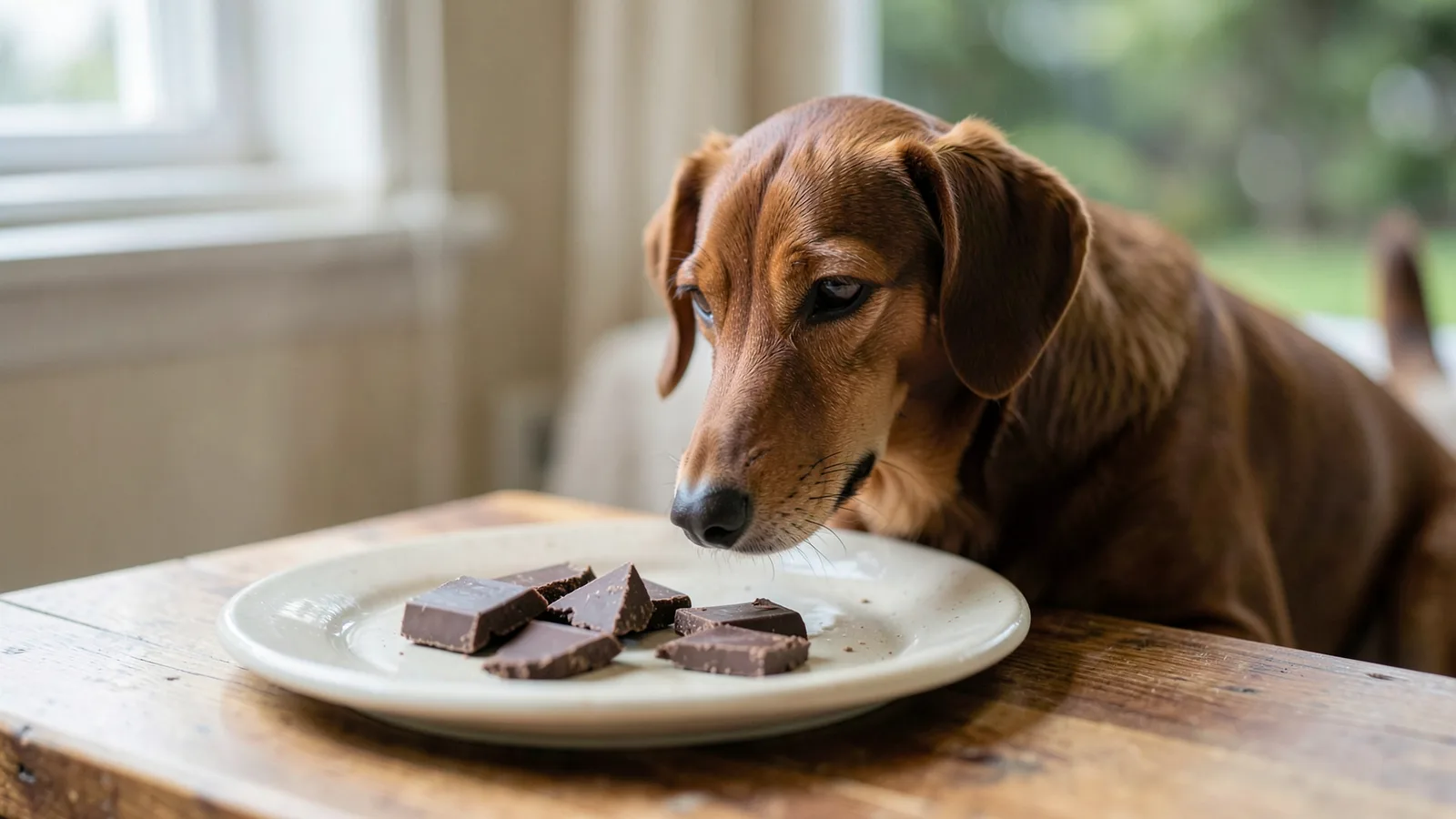
The short answer
Chocolate contains theobromine and caffeine, which dogs clear very slowly. Whether it is dangerous depends on the type of chocolate, the amount and your dog’s weight: dark and baking chocolate are far more toxic than milk chocolate, and small dogs are at greater risk. Signs usually start 6 to 12 hours after eating. If your dog ate chocolate, call your vet or a pet poison line now: treatment works best before symptoms appear.
Call a vet now if your dog has
- Tremors, twitching, stiffness or seizures
- A racing or irregular heartbeat, or collapse
- Severe agitation, panting or a high temperature
- Repeated vomiting or diarrhea after eating chocolate
- Any amount of dark, baking chocolate or cocoa powder eaten by a small dog
Chocolate is one of the most common reasons dogs end up at an emergency clinic, especially around holidays. The good news is that most cases end well, particularly when owners act quickly. The key is knowing that "chocolate" is not one thing: a few squares of milk chocolate and the same weight of baking chocolate carry very different risks.
If your dog has just eaten chocolate, use the calculator below to estimate the dose, then call your vet or a pet poison line with the result.
Dog Chocolate Toxicity Calculator
Enter your dog’s weight, the type of chocolate and how much was eaten to estimate the toxic dose and how urgently to call the vet.
Why chocolate is toxic to dogs
Chocolate contains two related stimulants, theobromine and caffeine, known together as methylxanthines. Theobromine makes up most of the dose. People break these down quickly, but dogs clear theobromine very slowly (its half-life in dogs is around 17.5 hours) so it builds up and keeps acting on the body for a long time.
Methylxanthines stimulate the nervous system and the heart, increase urine production, and irritate the stomach. In large enough doses they cause a dangerously fast or irregular heartbeat, tremors and seizures.
How much chocolate is dangerous?
Toxicity is measured as milligrams of methylxanthines per kilogram of your dog’s body weight. According to the Merck Veterinary Manual:
- About 20 mg/kg: mild signs such as vomiting, diarrhea and increased thirst
- 40 to 50 mg/kg: effects on the heart
- 60 mg/kg and above: seizures can occur
How quickly a dog reaches those doses depends almost entirely on the type of chocolate.
| Type of chocolate | Theobromine and caffeine per ounce |
|---|---|
| White chocolate | About 1 mg |
| Milk chocolate | About 65 mg |
| Dark or semisweet chocolate | About 155 mg |
| Cocoa bean hull garden mulch | About 255 mg |
| Unsweetened baking chocolate | About 440 mg |
| Dry cocoa powder | About 810 mg |
To make that practical, here is roughly how much chocolate brings a dog to the 20 mg/kg level where signs start. These are estimates, brands vary, and amounts above them are progressively more dangerous.
| Dog’s weight | Milk chocolate | Dark chocolate | Baking chocolate |
|---|---|---|---|
| 10 lb (4.5 kg) | 1.4 oz | 0.6 oz | 0.2 oz |
| 20 lb (9 kg) | 2.8 oz | 1.2 oz | 0.4 oz |
| 40 lb (18 kg) | 5.6 oz | 2.3 oz | 0.8 oz |
| 60 lb (27 kg) | 8.4 oz | 3.5 oz | 1.2 oz |
For scale, a standard milk chocolate bar is about 1.5 oz (43 g). So one bar can be enough to make a small dog ill, while a single square of baking chocolate can be a serious dose for a toy breed.
Signs of chocolate poisoning
Signs usually begin 6 to 12 hours after eating and can last up to 72 hours in severe cases. In roughly the order they tend to appear:
- vomiting and diarrhea, sometimes with a strong chocolate smell
- increased thirst and urination
- restlessness, hyperactivity and panting
- a fast heart rate
- wobbliness, muscle stiffness and tremors
- high body temperature
- an irregular heartbeat, seizures and collapse in severe cases
Puppies and older dogs, and dogs with heart disease, can be affected at lower doses.
What to do if your dog ate chocolate
- Stop further access. Pick up any wrappers and remaining chocolate, and keep other pets away.
- Work out what and how much. Keep the wrapper. Note the type of chocolate, the weight of the product and how much is missing, roughly when it was eaten, and your dog’s weight.
- Call your vet or a poison line now, before symptoms start. In the US, the ASPCA Animal Poison Control Center is on 888-426-4435 and the Pet Poison Helpline on 855-764-7661. Both charge a consultation fee.
- Do not make your dog vomit at home unless a vet tells you to and explains how. Salt, mustard and fingers down the throat are dangerous, and hydrogen peroxide should only ever be used on direct veterinary advice.
If your dog is already showing tremors, a racing heart or seizures, go straight to the nearest emergency clinic.
Check the rest of the ingredients
Chocolate products often contain other things that are toxic to dogs. Raisins and sultanas can cause kidney injury (see can dogs eat grapes), some sugar-free products contain xylitol, which causes a dangerous drop in blood sugar, and macadamia nuts cause weakness. Foil and plastic wrappers can also block the intestines.
How vets treat chocolate poisoning
There is no antidote for theobromine, so treatment focuses on getting it out of the body and supporting the heart and nervous system until it clears:
- Inducing vomiting with a veterinary medicine, usually if the chocolate was eaten within about the last two hours.
- Activated charcoal, often given in repeated doses, to bind theobromine still in the gut.
- Intravenous fluids to support the circulation and speed elimination through the kidneys.
- Keeping the bladder empty, sometimes with a urinary catheter, because theobromine can be reabsorbed from urine in the bladder.
- Medicines to control heart rate and rhythm, tremors and seizures as needed, with heart monitoring in hospital.
Most dogs treated early recover completely within one to three days.
The most dangerous sources
Some chocolate products carry far more risk than a bar of milk chocolate, and they are often the ones owners do not think of:
- Baking chocolate and cocoa powder, including open bags in the cupboard and baking chips.
- Brownies, chocolate cake and frosting, which may combine cocoa with dark chocolate.
- Hot chocolate and cocoa mixes, especially those high in cocoa.
- Chocolate-covered coffee beans, which add a large dose of caffeine.
- Cocoa bean hull mulch, which smells of chocolate and tempts some dogs to eat it from the garden.
- Chocolate advent calendars and gifts, which are often unwrapped and eaten whole, foil included.
Preventing it
Keep chocolate, cocoa powder and baking supplies in closed cupboards rather than on counters or low tables. Be especially careful at holidays, when chocolate gifts are wrapped under trees and in bags. Never use cocoa bean hull mulch in a garden your dog uses. If you have visitors or children, a quick reminder not to share sweets with the dog prevents a lot of emergencies.
For other common household dangers, see our guide to dog poisoning: toxic foods, symptoms and first steps. If your dog is vomiting and you are not sure why, read dog throwing up: causes and when to worry.
Common questions
How long after eating chocolate will a dog get sick?
Signs usually appear within 6 to 12 hours, although vomiting can start sooner. Because dogs clear theobromine slowly, signs can last for up to three days in severe cases. Do not wait for symptoms before calling a vet: the most effective treatment, removing chocolate from the stomach, has to happen early.
My dog ate chocolate but seems fine. Should I still call the vet?
Yes. A dog that seems fine an hour after eating chocolate may still develop signs later as the theobromine is absorbed. A vet or poison line can tell you from the type, amount and your dog’s weight whether treatment is needed, and early treatment is simpler, safer and cheaper.
Can a dog die from eating chocolate?
It is possible, though uncommon with prompt treatment. Deaths are associated with large doses (particularly of dark chocolate, baking chocolate or cocoa powder) in relation to the dog’s size. Most dogs treated early recover fully within a few days.
Is white chocolate safe for dogs?
White chocolate contains almost no theobromine, so it rarely causes chocolate poisoning. It is still high in fat and sugar, which can cause vomiting, diarrhea and, in some dogs, pancreatitis. Check the ingredients too, because some products contain raisins, nuts or xylitol.
Tools for this
- Dog Chocolate Toxicity Calculator
Enter your dog’s weight, the type of chocolate and how much was eaten to estimate the toxic dose and how urgently to call the vet.
Sources
- Chocolate Toxicosis in Animals, Merck Veterinary Manual
- People Foods to Avoid Feeding Your Pets, ASPCA Animal Poison Control Center
This article is general information to help you decide what to do next. It is not a diagnosis and is not a substitute for examination by a veterinarian. If you are worried about your dog, call your vet.
Reviewed by Winzah, Editor, on . How we research and check articles.