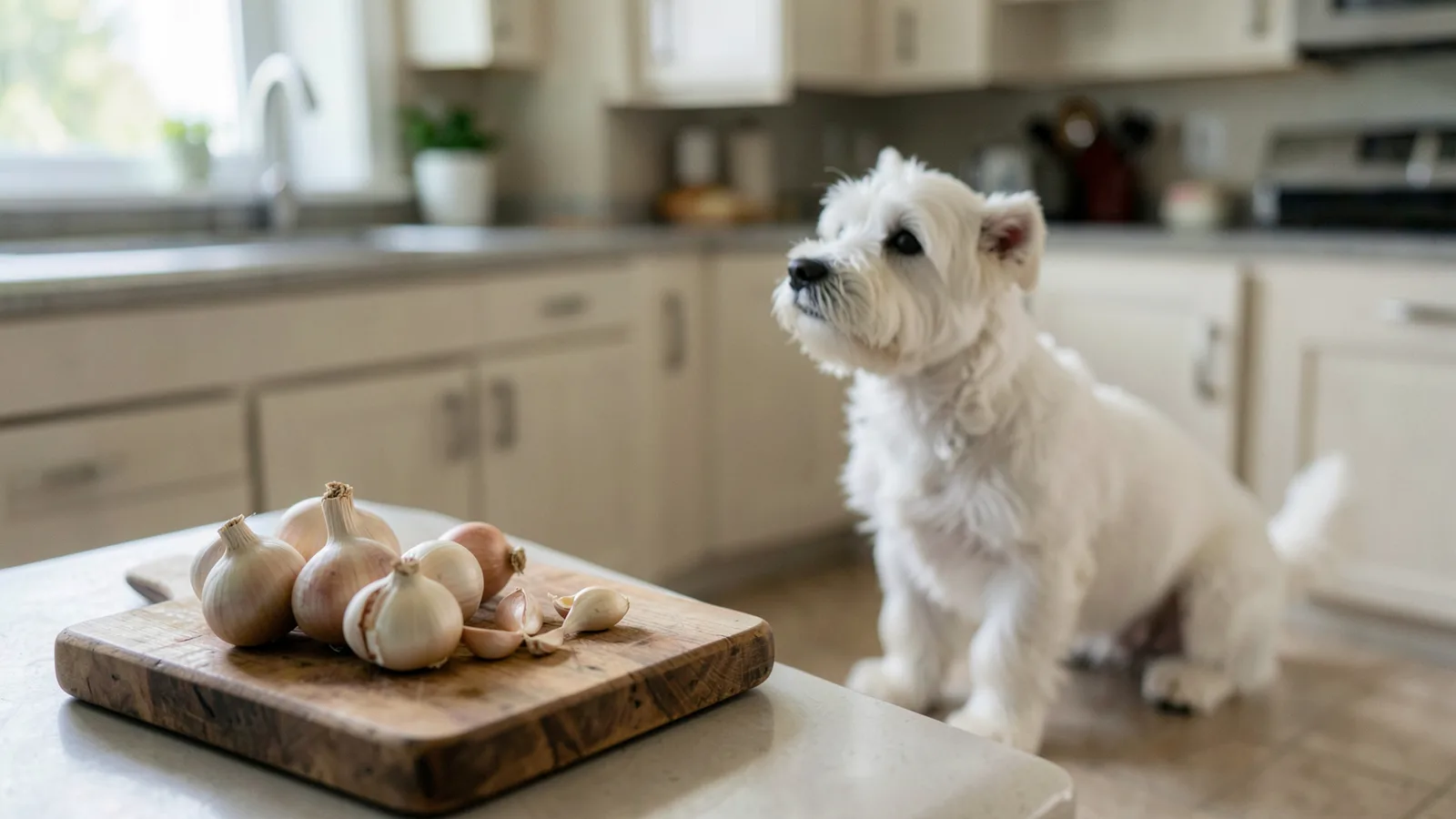
The short answer
No. Garlic is not safe for dogs. Like onion, it damages red blood cells and can cause anemia, and the Merck Veterinary Manual describes it as three to five times more toxic than onion, so smaller amounts matter. Garlic powder and garlic supplements are especially concentrated. If your dog ate garlic, call your vet or a pet poison line, and watch for weakness, pale gums or dark urine over the following week.
Call a vet now if your dog has
- Pale, white or yellowish gums
- Red, brown or dark urine
- Weakness, collapse or exercise intolerance in the days after eating garlic
- Fast breathing or a racing heart at rest
- A large amount of garlic, garlic powder or garlic supplements eaten
Garlic has a reputation as a health food, and some owners deliberately add it to their dog’s bowl to ward off fleas or boost immunity. Unfortunately, for dogs garlic is a toxin, not a tonic. It belongs to the same plant family as onion and causes the same kind of damage to red blood cells, and it is considerably stronger.
This guide explains why garlic is harmful, how much is dangerous, the myths worth ignoring, and what to do if your dog has eaten some.
Why garlic is toxic to dogs
Garlic is a member of the Allium family, along with onions, leeks, chives and shallots. These plants contain sulfur compounds that cause oxidative damage to red blood cells once absorbed. The damaged cells become fragile and are broken down early, which can lead to hemolytic anemia: too few healthy red blood cells to carry oxygen.
The Merck Veterinary Manual describes garlic as three to five times more toxic than onion. Raw, cooked, roasted, dried, powdered and supplement forms are all a risk, and cooking does not make it safe.
How much garlic is dangerous?
There is no precise, well-established toxic dose of garlic for dogs, and sensitivity varies between individuals. What we do know:
- Clinical signs have been reported in dogs after 15 to 30 grams of raw onion per kilogram of body weight.
- Garlic is three to five times more potent than onion.
Putting those together gives a rough sense of scale (an estimate, not a safe limit) of around 3 to 10 grams of garlic per kilogram of body weight. For a 20 lb (9 kg) dog that is roughly 27 to 90 grams, or something like five to eighteen average cloves. For a 10 lb dog it is roughly half that.
Two things make real-world exposures more dangerous than these numbers suggest:
- Concentrated forms. Garlic powder, granules, dried garlic and garlic supplement tablets contain far more garlic per gram than fresh cloves. A few teaspoons of powder can be a significant dose for a small dog.
- Repeated feeding. Small amounts given every day (in table scraps, homemade food or “natural” supplements) can add up to cause anemia over time.
Myths about garlic and dogs
“Garlic keeps fleas away.” There is no reliable evidence that feeding garlic repels fleas or ticks, and the doses some owners use are enough to damage red blood cells. Effective, safe flea and tick prevention is available from your vet.
“A little garlic boosts the immune system.” Health claims for garlic in dogs are not backed by good evidence, while its effect on the blood is well documented.
“It’s fine because it’s in some dog treats.” A few products contain small amounts of garlic as a flavouring. Their presence on a shelf is not evidence of safety, and many vets advise avoiding them.
Where garlic hides
Fresh cloves are easy to spot. Garlic in prepared food is not. Check labels and recipes for garlic, garlic powder, garlic salt, dried or granulated garlic and “Allium sativum”, and be careful with:
- pasta sauces, curries, stir-fries and soups
- pizza, garlic bread and garlic butter
- stock cubes, bouillon and gravy granules
- sausages, burgers, meatballs, marinated and seasoned meats
- hummus, dips and dressings
- seasoning blends and some savoury snacks
- “natural” supplements and a few treats sold for dogs
If you cook for your dog, leave garlic and onion out of their portion entirely: plain, unseasoned food is safest.
Safer alternatives
If you were giving garlic for fleas or ticks, ask your vet about licensed parasite prevention. These products are tested for safety and actually work. If you were using it to make food more appealing, plain cooked chicken, a little warm water on dry food or a vet-recommended food topper are safe ways to tempt a fussy eater.
Signs of garlic poisoning in dogs
Within the first day, some dogs have vomiting, diarrhea, drooling or belly discomfort, and garlic breath. Many show nothing at first.
Over the next three to five days or so, as red blood cells are destroyed, watch for:
- lethargy, weakness and tiring easily on walks
- pale, white or yellow-tinged gums
- fast breathing and a fast heart rate at rest
- red, brown or dark urine
- reduced appetite
- collapse in severe cases
What to do if your dog ate garlic
- Take away anything left and note what it was: fresh cloves, a garlicky dish, garlic bread, powder or supplements, and roughly how much.
- Note your dog’s weight.
- Call your vet or a pet poison line. In the US, the ASPCA Animal Poison Control Center is on 888-426-4435 and the Pet Poison Helpline on 855-764-7661. Both charge a fee.
- Do not induce vomiting unless a vet tells you to and explains how.
- Check your dog’s gums and urine daily for about a week, even if your dog seems normal.
Garlic bread is a double problem
Garlic bread combines garlic with a lot of butter or oil. Fatty food can trigger vomiting, diarrhea and, in some dogs, pancreatitis, a painful inflammation of the pancreas, on top of the risk from the garlic itself.
If you have been feeding garlic regularly
Some owners only discover that garlic is harmful after giving it for weeks or months, often as a flea remedy or supplement. If that is you, there is no need to panic, but do stop feeding it and mention it to your vet. A simple blood test can show whether your dog’s red blood cells have been affected, and dogs with mild changes usually recover once the garlic is removed from their diet. Book a check sooner if your dog seems tired, has pale gums or dark urine.
How vets treat garlic poisoning
Treatment is the same as for onion poisoning. If the garlic was eaten recently, the vet may induce vomiting and give activated charcoal. They will then monitor red blood cell counts with blood tests over several days. Supportive care with fluids and rest is often all that is needed. Dogs with severe anemia may need oxygen or a blood transfusion. Most dogs recover as new red blood cells are made.
Related foods
Onions carry the same risk at a somewhat larger dose. See can dogs eat onions. Leeks, chives and shallots are in the same family. For other dangerous foods, including chocolate and grapes and raisins, see our poisoning and emergencies section.
Common questions
Is a little garlic good for dogs?
There is no good evidence that garlic benefits dogs, and it is a known cause of red blood cell damage. Claims that small amounts boost immunity or repel fleas are not supported, while the risk is well documented. Most vets advise not feeding garlic at all and using proven, vet-recommended products for flea control instead.
My dog ate food cooked with garlic. Is that dangerous?
It depends on how much garlic was in the food and how big your dog is. A lick of a dish with a little garlic is unlikely to harm a large dog, but rich sauces, garlic bread, roasted garlic and garlic powder can deliver meaningful doses, especially to small dogs. Call your vet or a poison line with your best estimate and watch for signs over the following week.
Why are some dog treats made with garlic?
A few commercial treats and supplements contain small amounts of garlic, usually as a flavouring or marketed for health claims. Evidence on very small amounts is limited, but because garlic’s effect on red blood cells is well established and can build up with repeated feeding, many vets recommend avoiding these products.
How long after eating garlic does a dog show symptoms?
Stomach upset can appear within a day, but anemia from red blood cell damage typically develops over three to five days. A dog can seem fine at first and become weak and pale later in the week, so keep watching even if nothing happens straight away.
Sources
- Garlic and Onion (Allium spp) Toxicosis in Animals, Merck Veterinary Manual
- Toxic and Non-toxic Plants: Garlic, ASPCA Animal Poison Control Center
- Garlic, Pet Poison Helpline
This article is general information to help you decide what to do next. It is not a diagnosis and is not a substitute for examination by a veterinarian. If you are worried about your dog, call your vet.
Reviewed by Winzah, Editor, on . How we research and check articles.
Related articles
Can Dogs Eat Onions?
No. Raw, cooked and powdered onions damage dogs’ red blood cells. How much onion is toxic, the delayed signs to watch for, and what to do if your dog ate onion.
Can Dogs Eat Grapes or Raisins?
No: grapes, raisins, sultanas and currants can cause sudden kidney injury in dogs. What makes them toxic, the signs, and what to do if your dog ate one.
Chocolate Poisoning in Dogs: Symptoms, Toxic Amounts and What to Do
How much chocolate is dangerous for your dog’s size, the signs of chocolate poisoning and when they start, and what to do right now if your dog ate chocolate.