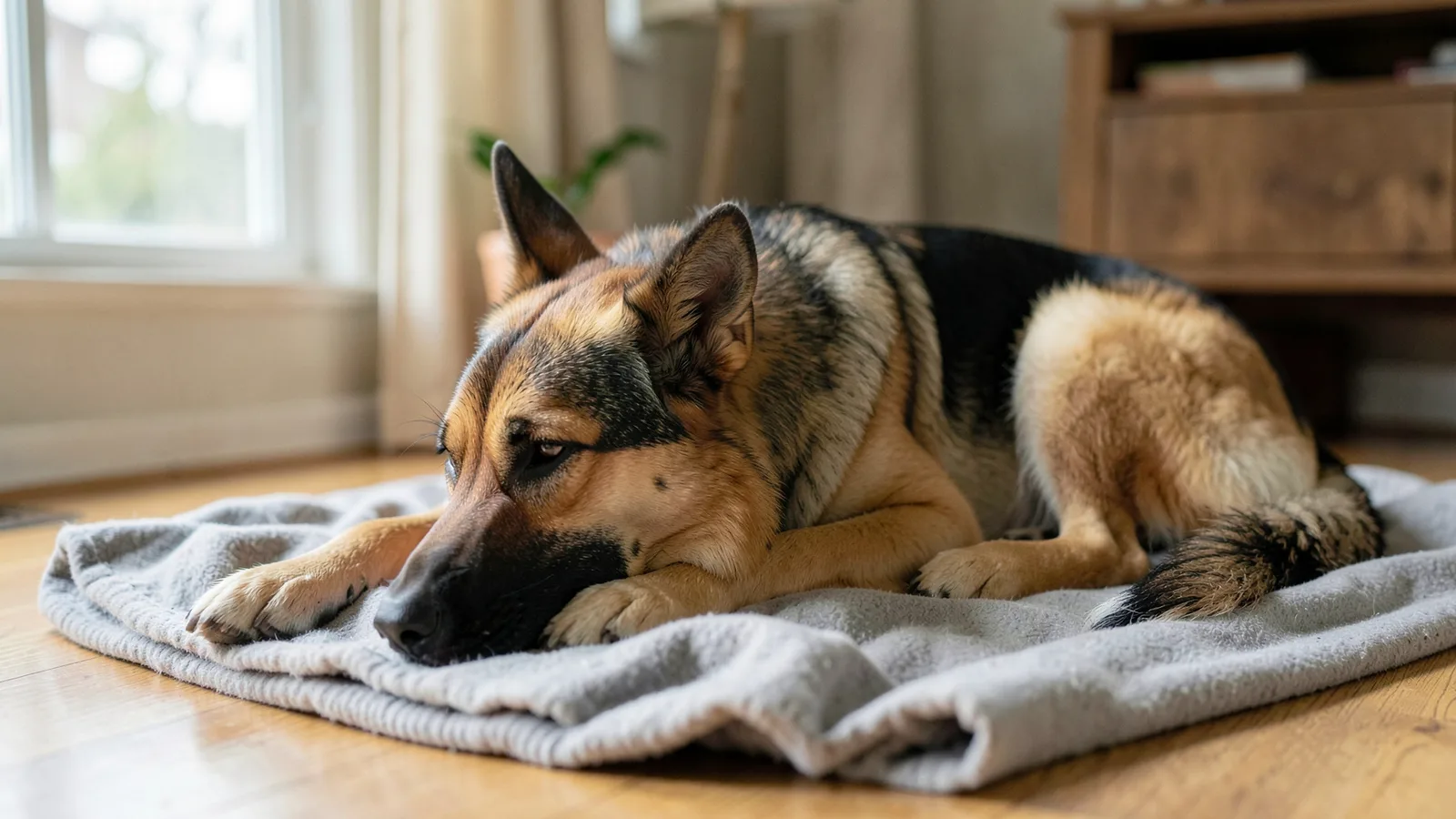
The short answer
A dog throwing up blood should be seen by a vet urgently, the same day at the very least. Bright red streaks suggest fresh bleeding from the mouth, throat or stomach. Dark, grainy material like coffee grounds is blood your dog's stomach acid has partly digested. Causes range from ulcers to poisons, so don't try home treatment.
Call a vet now if your dog has
- Vomit that contains blood, in any amount
- Pale or white gums
- Weakness, collapse or a very quiet dog
- Black, tarry stool or bloody diarrhea
- Repeated vomiting or unproductive retching
- A swollen, hard or painful belly
- Known access to rat poison, pain medicine or a swallowed object
Seeing blood in your dog's vomit is frightening. It should be. A dog throwing up blood needs to be seen by a vet urgently, and the sooner the better.
Vets call this hematemesis. It means blood is coming from somewhere between the mouth and the upper intestine. The cause could be minor, like a scratch from a stick. It could also be an ulcer, a poison or a blocked gut. You can't tell which at home, so don't try.
What the blood looks like tells a story
Take a good look before you clean up, and photograph it. The color and texture give your vet clues about where the bleeding started.
Bright red streaks or specks
Fresh red blood suggests recent or active bleeding. It can come from the mouth, throat or esophagus, or from a fast bleed in the stomach. A dog that has been retching hard can also bring up a few streaks from irritated tissue. Don't count on that being the reason.
Dark brown or black "coffee grounds"
Dark, grainy material that looks like used coffee grounds is blood that has been partly digested. Stomach acid turns red blood brown. This usually points to bleeding in the stomach or upper small intestine, and it often fits an ulcer. It's just as serious as bright red blood.
Blood with mucus, bile or food
Blood mixed with foam or mucus is still blood. Mention everything you saw. For vomit that is yellow without any blood, see our guide to a dog throwing up yellow.
Describe it like a vet would want it
Note when the vomiting started, how many times your dog has been sick, and how much blood you saw. Mention whether there's also diarrhea or black stool. A clear photo and a short timeline can save time at the clinic.
Common causes of a dog throwing up blood
Gastric ulcers, including from NSAIDs
The Merck Veterinary Manual lists NSAID use, tumors and liver disease as primary causes of stomach and intestinal ulcers in dogs. NSAIDs are anti-inflammatory pain medicines. They damage the lining and reduce protective prostaglandins. Kidney disease and pancreatitis are other causes the manual names.
Ulcers can cause vomiting, poor appetite, belly pain and weight loss, and some dogs vomit blood or pass black stool. Never give your dog human pain medicine. Even a vet-prescribed NSAID needs watching for stomach upset.
Swallowed foreign objects
Socks, toys, corn cobs and bones can scrape or block the digestive tract. A sharp object can tear the lining. Webvet lists sharp foreign objects among the causes that need emergency care, and VCA lists intestinal obstruction among the serious causes of vomiting with blood. Repeated vomiting and a painful belly are red flags.
Hemorrhagic gastroenteritis
Acute hemorrhagic diarrhea syndrome, once called hemorrhagic gastroenteritis, strikes suddenly with vomiting and bloody diarrhea. VCA says small and toy breeds such as Yorkshire Terriers, Cavalier King Charles Spaniels and Maltese are most vulnerable, though any breed can be hit. It may be linked to a gut bacterium called Clostridium perfringens. Treatment centers on IV fluids. Without fluids, dogs risk a potentially fatal clotting disorder.
Poisons, including rat poison and clotting problems
Anticoagulant rodenticides stop blood from clotting. VCA lists vomiting blood and dark stools among the signs, along with pale gums, weakness, bruising and trouble breathing. Signs are often delayed, because bleeding can happen inside the belly, chest or gut. Call your vet or the Pet Poison Helpline at (855) 764-7661 and bring the packaging. If you think this is possible, tell the clinic straight away. Other toxins can also cause bleeding. For general poisoning advice, visit our poisoning emergencies section.
Infections such as parvovirus
Parvovirus causes severe vomiting and diarrhea, sometimes with blood, along with lethargy, fever and loss of appetite. Puppies under five months old are the most severely affected. VCA calls it a medical emergency. Puppies get vaccines at 8, 12 and 16 weeks. If your puppy is unvaccinated and vomiting, don't wait.
Liver or kidney disease
VCA lists liver and kidney disease among the serious causes of vomiting with blood. These illnesses can damage the stomach lining or affect clotting. Dogs often show other signs first, such as drinking and urinating more, weight loss or a poor appetite. Blood tests find them.
Mouth or throat injuries and swallowed blood
A cut from a stick or bone, a damaged tooth or a nosebleed can leave blood in the stomach, which then comes back up. The vomit may look red or dark. This can look scary even when the stomach is fine. Only a vet can tell the difference, so get your dog checked.
Quick reference
| What you see | What it can suggest | Urgency |
|---|---|---|
| Bright red streaks | Fresh bleeding from the mouth, throat, esophagus or stomach | Urgent |
| Coffee-ground material | Partly digested blood, often from an ulcer | Urgent |
| Blood plus bloody diarrhea | Hemorrhagic gastroenteritis, parvovirus, poison | Emergency |
| Blood plus pale gums or weakness | Significant blood loss or shock | Emergency |
| Blood plus unproductive retching and swollen belly | Possible bloat | Emergency |
What to do on the way to the vet
Call the clinic first. Tell them your dog is vomiting blood so they can prepare. Then:
- Remove food and water. Webvet advises withholding both temporarily. Your vet will tell you when your dog can eat or drink again.
- Keep your dog calm and still. Quiet on a towel in the car is best.
- Take a photo of the vomit, with the time and how often it's happened.
- Bring a sample in a clean container, if you can collect it safely. Wear gloves.
- Check the gums. Pink is normal. Pale or white is an emergency.
- Bring anything suspicious, like medicine bottles, plants, toys or rat bait packaging.
What not to do
Don't give human pain relievers, antacids or home remedies. Don't try to make your dog vomit again. Webvet warns that these can worsen bleeding. If you're worried your dog swallowed something harmful, read why making a dog throw up is often the wrong move.
What your vet will do
Expect a physical exam and questions about medicines, diet and what your dog could have eaten. The Merck manual describes blood, urine and fecal tests, X-rays and sometimes ultrasound, with endoscopy and biopsies when needed. Treatment depends on the cause. It often starts with IV fluids, stomach protectants and anti-nausea medicine.
When to see a vet
Right now. Vomiting blood is a reason to call the same day and often to go straight in. Go immediately if you see pale gums, collapse, repeated vomiting, black stool, bloody diarrhea, a swollen belly or any chance of poison.
If your dog is vomiting but there's no blood, our dog vomiting guide explains the common causes. If you've seen blood in the stool, read about blood in dog stool. For more, visit the digestive health section.
Common questions
Is it an emergency if my dog threw up blood once?
Treat it as urgent. Even a small amount can come from an ulcer, a poison or a swallowed object, and some of those get worse fast. Call your vet right away, describe what you saw, and follow their advice about how quickly to come in.
What does dog vomit with blood look like?
It can be bright red streaks or specks, or dark brown to black grainy material that looks like coffee grounds. The dark version is blood that has been partly digested in the stomach. Both mean your dog needs to be checked.
Can I give my dog anything to settle its stomach?
No. Human medicines such as pain relievers can worsen bleeding and some are toxic to dogs. Don't offer home remedies, and don't make your dog vomit again. Take away food and water and go to the vet.
Should I take a sample of the vomit to the vet?
Yes if you can do it safely. Take a clear photo first, then scoop a little into a clean container or bag and wear gloves. Also bring any packaging or medicine your dog might have swallowed.
Can my dog throw up blood and have bloody diarrhea at the same time?
Yes. Acute hemorrhagic diarrhea syndrome, parvovirus and some poisons can cause both. Vomiting with bloody diarrhea is a medical emergency, especially in puppies and small dogs, so go to a vet immediately.
Sources
- Dog Vomiting Blood: Is It an Emergency?, Webvet
- Gastrointestinal Ulcers in Small Animals, Merck Veterinary Manual
- Hemorrhagic Gastroenteritis in Dogs, VCA Animal Hospitals
- Anticoagulant Rodenticide Poisoning in Dogs, VCA Animal Hospitals
- Parvovirus in Dogs, VCA Animal Hospitals
- Vomiting in Dogs, VCA Animal Hospitals
- Pet Poison Helpline, Pet Poison Helpline
This article is general information to help you decide what to do next. It is not a diagnosis and is not a substitute for examination by a veterinarian. If you are worried about your dog, call your vet.
Reviewed by Winzah, Editor, on . How we research and check articles.
Related articles

Expressing a Dog's Anal Glands: What It Is and How It's Done
What anal glands do, why most dogs never need them emptied by hand, how vets and groomers do it, and the careful home method one source describes.
Why Does My Dog Have Diarrhea? Causes, What to Give and When to Call the Vet
Common causes of dog diarrhea, what you can safely give at home, why to ask a vet before human medicines, and the signs that mean a same-day visit.
Worms in Dog Poop: What They Look Like and How to Tell If Your Dog Has Worms
What roundworms, tapeworms, hookworms and whipworms look like in dog poop, the signs when you can't see any, and what to do next. Includes a quick-ID table.