The short answer
Kidney disease in dogs comes in two forms. Chronic kidney disease develops over months or years, mostly in older dogs, and the earliest signs are drinking and urinating more. Acute kidney injury hits suddenly, often after a toxin like grapes or antifreeze, and is an emergency. Signs usually don't show until about two thirds of kidney function is gone, so regular blood and urine tests matter. Chronic disease can't be cured, but diet and medication can slow it.
Call a vet now if your dog has
- Sudden loss of appetite with vomiting or marked tiredness
- Little or no urine, or a sudden change in how much your dog urinates
- Your dog may have eaten grapes, raisins, antifreeze or human pain relievers
- Collapse, seizures or severe weakness
- Sudden illness with mouth ulcers or an unusual odor on the breath
Your dog's kidneys are the body's filter and recycling plant. They clear waste from the blood, balance fluids and salts, and help control blood pressure. When they struggle, almost everything else does too.
The tricky part is that kidney disease is quiet. It can be sudden or slow, and by the time your dog looks sick, most of the damage may already be done. Knowing what to watch for gives you a real head start.
Acute kidney injury versus chronic kidney disease
Vets split kidney problems into two groups. They can look alike from the outside, but they behave very differently.
| Acute kidney injury | Chronic kidney disease | |
|---|---|---|
| Onset | Sudden, over hours or days | Slow, over months or years |
| Typical dog | Any age | Mostly older dogs |
| Common causes | Toxins, drugs, infection, shock | Aging, infection, inherited disease, high blood pressure |
| Can it reverse? | Sometimes, if treated fast | No, but it can be slowed |
| How urgent? | Emergency | Needs a vet plan, not usually a same-day crisis |
Acute kidney injury
Think of acute injury as a pipe bursting. Something damages the kidneys suddenly, and they stop filtering. Causes include toxins such as antifreeze, grapes and raisins, certain drugs including human anti-inflammatories, infections such as leptospirosis and Lyme disease, heatstroke, snake bites and low blood flow from shock.
Signs often include sudden loss of appetite, vomiting, listlessness, odd breath and changes in how much your dog pees. Some dogs drink a lot. Others make little or no urine.
Treatment centers on intravenous fluids, usually for 24 to 96 hours, plus anti-nausea drugs and nutrition support. The outlook is guarded. VCA reports that roughly 60 percent of dogs with acute injury don't survive. Merck says about half of dogs with severe acute injury will survive. The kidneys can regrow some tissue, so recovery is possible when treatment starts early.
Chronic kidney disease
Chronic disease is more like a roof that slowly leaks. It happens gradually, and it becomes more common from age 5 or 6. Merck says it affects up to 10 percent of elderly dogs. Small dogs often show signs around 10 to 14 years. Large dogs can reach kidney failure as early as 7.
What causes kidney disease in dogs
Sometimes there's a clear trigger. Often there isn't. Here are the main causes your vet will look for.
Toxins
Grapes and raisins can cause sudden kidney failure in some dogs. If your dog has eaten any, treat it as an emergency and read our guide on whether dogs can eat grapes. Antifreeze is another classic cause. The AKC also lists lilies among the toxic exposures that can trigger acute kidney disease.
Medications
Human pain relievers and anti-inflammatories can injure a dog's kidneys. Some antibiotics can too. Never give your dog human medication unless your vet tells you to.
Infection and inflammation
Bacterial infection of the kidney (pyelonephritis), leptospirosis and Lyme disease can all damage kidney tissue. So can glomerulonephritis, where the kidney's tiny filters become inflamed.
Inherited and age-related problems
Some dogs are born with malformed kidneys. Others inherit kidney conditions. Many older dogs simply wear out their filters over time. Other contributors include high blood pressure, tumors, kidney stones and protein deposits called amyloidosis.
Signs of kidney disease in dogs
Your dog's kidneys hide trouble well. VCA notes that at least two thirds of kidney function must be lost before any clinical signs appear. That's why dogs can look perfectly healthy while disease is already underway.
Early signs
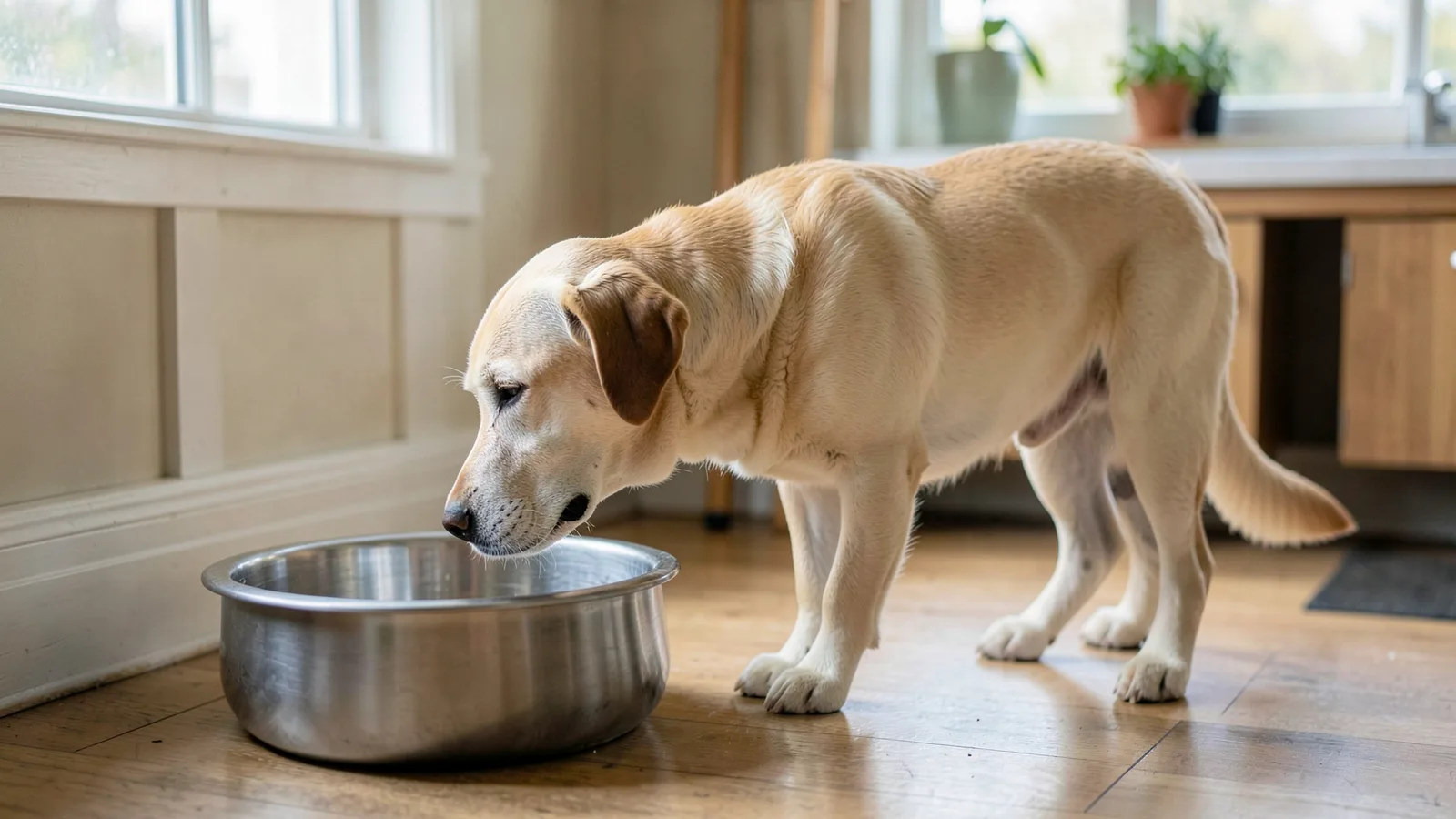
The first sign is usually drinking and urinating more. As kidneys weaken, they can't concentrate urine, so more water passes through and your dog drinks to keep up. You might notice you're refilling the bowl more often, or your house-trained dog is asking out at night.
Later signs
As waste builds up in the blood, you may see:
- poor appetite and weight loss
- vomiting and diarrhea
- tiredness and weakness
- pale gums from anemia
- bad breath, sometimes smelling of ammonia or urine
- mouth ulcers
Breath that smells like urine is a late sign. It means waste products have built up. Don't wait for it.
Why a normal-looking dog can have serious disease
Imagine a factory losing two of every three workers and still shipping orders on time. Kidneys compensate in much the same way until the last few workers can't keep up. That's why regular blood and urine tests are worth it for older dogs, even when they seem fine.
The four stages of chronic kidney disease
Vets stage kidney disease using a scale from the International Renal Interest Society (IRIS). It draws on blood tests such as creatinine and SDMA, urine protein levels and blood pressure. The AKC explains that as the stage rises, kidney function worsens. Merck's breakdown looks like this.
| Stage | What's happening | What you may see |
|---|---|---|
| 1 | Kidney damage, but waste levels in blood still normal | Usually nothing |
| 2 | Filtering reduced and waste starts to build | Possibly more urination |
| 3 | Further decline with raised waste levels | Excessive thirst and urination |
| 4 | Severe loss of filtering, toxins build up | Vomiting, poor appetite, weight loss, dehydration, mouth sores, diarrhea |
Early stages of kidney disease in dogs
Stages 1 and 2 are the best time to act. Dogs often look normal, and the diagnosis may come from routine bloodwork. Catching it here gives you the longest runway for diet changes and monitoring. The AKC notes that early detection through regular exams helps preserve kidney function.
Advanced kidney failure
By stages 3 and 4 the signs are hard to miss. Dogs may feel nauseous much of the time, which is why appetite drops. Treatment becomes more intensive. Merck suggests vet visits every 3 to 6 months in early disease, and every 1 to 2 months in late stages.
How vets diagnose it
Your vet will start with a physical exam and your history of thirst, appetite and weight. Then comes testing:
- Urinalysis checks how concentrated the urine is and whether protein is leaking out.
- Blood chemistry measures waste products such as BUN, creatinine and SDMA.
- Blood count looks for anemia.
- Blood pressure is checked because about 20 percent of dogs with chronic disease develop high blood pressure.
- X-rays or ultrasound can find stones, tumors or changes in kidney size.
Tests are repeated over time, because a single result can't show whether the problem is new or old.
Treatment for dog kidney failure
Merck is blunt about this. It's rarely possible to repair existing kidney damage, but progression can be slowed. Treatment is about protecting what's left and keeping your dog feeling well.
Diet
A prescription kidney diet is the cornerstone. These foods have restricted phosphorus and moderately reduced protein, which lowers the workload on the kidneys and the waste they have to clear. They often include omega-3 fatty acids. VCA recommends unlimited fresh water, and canned food helps with fluid intake. If your dog turns up its nose, adding water or low-sodium broth can make food more tempting. Ask your vet about appetite support too.
Fluids and medication
Depending on the stage, your vet may suggest:
- fluids given under the skin, sometimes at home
- phosphate binders to reduce phosphorus absorption
- anti-nausea drugs
- appetite stimulants
- blood pressure medication
- drugs such as benazepril to reduce protein loss in urine
- treatment for anemia in advanced cases
Dialysis and kidney transplants exist, but they're rarely practical for dogs.
Even low function can mean good time
Merck notes that dogs with as little as 5 percent of normal kidney function can survive for a long time with good management. Many dogs have months or years of good days after diagnosis. The outlook depends on the stage at diagnosis and how well your dog responds.
Caring for a dog with kidney disease at home
Daily habits make a real difference once your vet has a plan in place.
Keep water everywhere
Dogs with kidney disease lose a lot of fluid, so dehydration is a constant risk. Keep fresh water in several rooms and wash the bowls daily. Don't limit drinking. If your dog has a long day alone, make sure the water bowl is full and easy to reach.
Make meals appealing
Nausea makes dogs fussy. Small, frequent meals are often easier to keep down than two big ones. VCA suggests adding water, tuna juice or low-sodium broth to make food more appealing. Switch diets gradually over a week or so, because a sudden change can put a dog off food completely. If your dog still won't eat, call your vet. Feeding tubes are an option for dogs who can't meet their energy needs.
Track the numbers
A simple notebook helps. Write down:
- how much your dog drinks in a day
- how often your dog urinates
- body weight every week or two
- appetite and any vomiting
Trends tell your vet more than a single snapshot. A slow drop in weight, for example, can show up before bloodwork changes.
Is kidney failure painful, and what are the last days like?
Kidney disease isn't typically painful the way a broken bone is. The suffering comes from nausea, mouth ulcers, dehydration and weakness. Medication can ease these, which is why a dog in stage 4 can still have good days.
In the final stage, a dog may refuse food, vomit often, lose weight quickly or sleep most of the day. If treatment no longer keeps your dog comfortable, talk to your vet about quality of life. It's a hard conversation, but a kind and honest one.
Vomiting is a common thread in kidney trouble, so see our guide to why dogs vomit. Hormone problems can also cause heavy drinking and urinating, for example Addison's disease. Browse the full conditions and diseases section for more.
When to see a vet
Kidney problems reward early action, so don't wait on these.
- Today, as an emergency: your dog may have eaten grapes, raisins, antifreeze or human painkillers. Also go if your dog has sudden vomiting with lethargy, makes little or no urine, collapses or has seizures.
- Within a day or two: your dog is drinking and urinating more than usual for more than a couple of days, or has new accidents indoors.
- Soon: weight loss, poor appetite, bad breath, pale gums or recurring vomiting.
- Routinely: ask your vet how often your older dog should have blood and urine tests.
If you can, note how much your dog drinks in 24 hours. It helps your vet get answers quickly.
Common questions
Is kidney failure painful for dogs?
Kidney disease itself isn't usually described as painful. The discomfort comes from nausea, mouth ulcers, vomiting and weakness as waste builds up in the blood. Some causes, such as kidney stones or infection, can hurt. Anti-nausea drugs, fluids and diet changes often make dogs feel much better.
How do you know if your dog has kidney failure?
The earliest clue is usually drinking and urinating more. Later signs include weight loss, poor appetite, vomiting, pale gums and bad breath. Only blood and urine tests can confirm it, so see your vet if your dog's thirst changes for more than a day or two.
Can a dog recover from kidney failure?
It depends on the type. Acute kidney injury can improve or even fully recover if it's caught and treated quickly, though severe cases are often fatal. Chronic kidney disease can't be reversed, but many dogs live comfortably for months or years with diet, fluids and medication.
What are the last days of a dog with kidney failure like?
In the final stage, dogs often refuse food, vomit, lose weight, become dehydrated, develop mouth sores and sleep much more. When good days become rare and treatment no longer keeps your dog comfortable, your vet can talk through quality of life and end-of-life choices with you.
Sources
- Chronic Kidney Disease in Dogs, VCA Animal Hospitals
- Acute Kidney Injury in Dogs, VCA Animal Hospitals
- Noninfectious Diseases of the Urinary System in Dogs, Merck Veterinary Manual
- Kidney Disease in Dogs, American Kennel Club
This article is general information to help you decide what to do next. It is not a diagnosis and is not a substitute for examination by a veterinarian. If you are worried about your dog, call your vet.
Reviewed by Winzah, Editor, on . How we research and check articles.