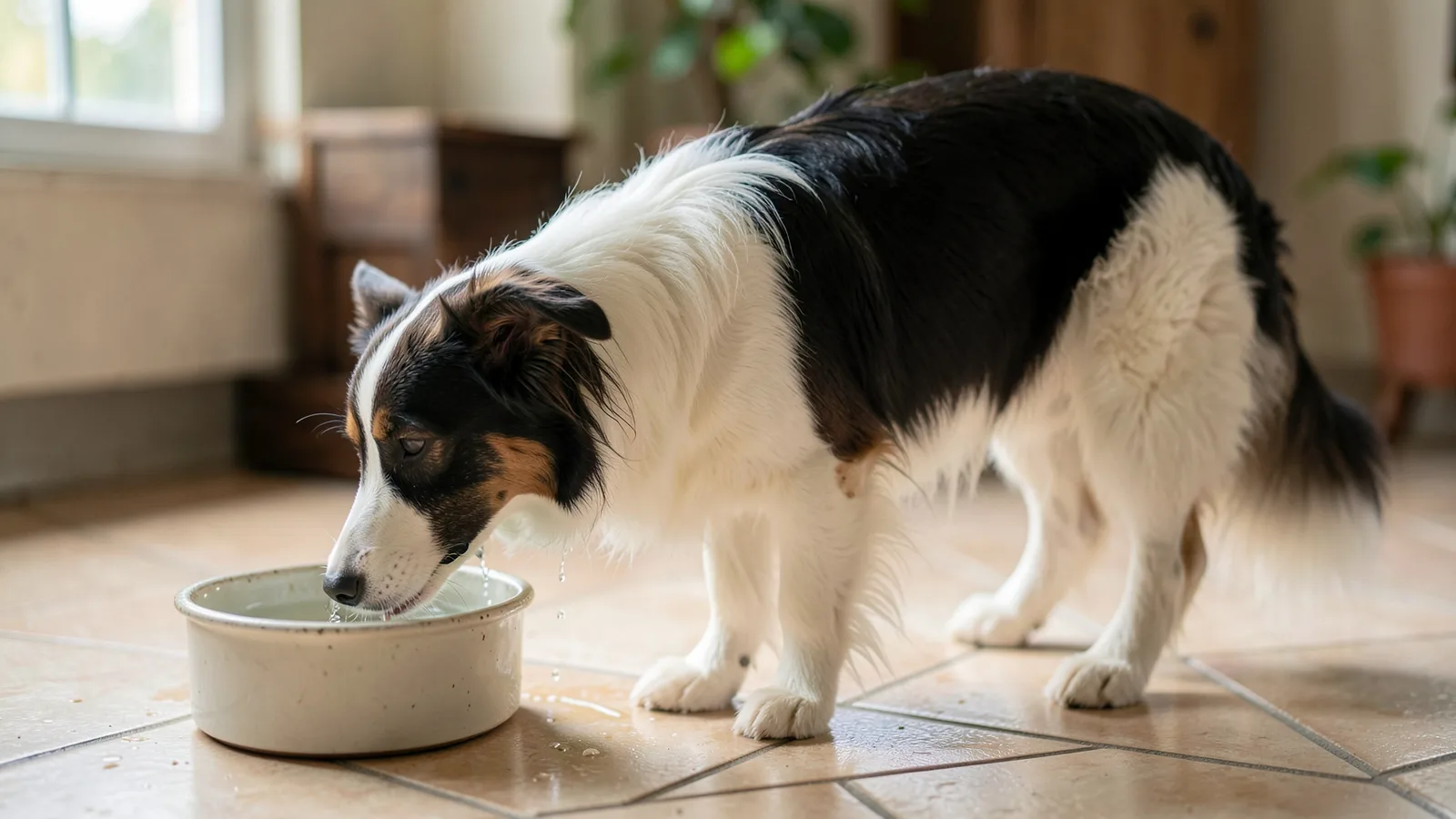
The short answer
White foam is usually a mix of saliva, stomach fluid and air from an empty or irritated stomach, and a single episode in a dog that is otherwise well is rarely serious. But white foam also comes up when a dog coughs and gags, kennel cough is a common culprit, and repeated, unproductive retching of white foam with a swollen belly can be bloat, which is an emergency.
Call a vet now if your dog has
- Repeatedly retching up white foam or nothing at all, especially with a swollen or tight belly
- Restlessness, pacing, drooling and being unable to settle or lie down
- Fast or difficult breathing, or blue, grey or very pale gums
- Vomiting again and again, or blood in the vomit
- Collapse or severe weakness
White, frothy vomit looks alarming, but on its own it tells you less than you might think. Foam is simply fluid that has been churned with air, usually saliva and stomach juices, and it can come up for very ordinary reasons. The useful questions are how it came up, how often, and how your dog is in between.
This guide covers the common causes, the one pattern that is a true emergency, what you can do at home, and when to call your vet.
What white foam actually is
When the stomach has little or no food in it, what remains is mostly saliva, mucus and stomach acid. If the stomach is irritated and empties itself, that thin liquid is whipped with air on the way up and comes out as white foam. If a little bile is mixed in, the foam turns yellow. See dog throwing up yellow for that pattern.
The same foam can also come from the airway rather than the stomach. A dog with an irritated throat or windpipe may cough hard, gag, and bring up a small amount of foamy saliva. Owners very often describe this as vomiting, which is why watching what happens just before the foam appears matters so much.
First, work out whether it is vomiting or coughing
- Vomiting from the stomach usually comes with warning signs (lip-licking, drooling, swallowing) then rhythmic heaving of the belly, and the foam lands in a puddle.
- Coughing and gagging starts with a cough, often a harsh honk, and ends with a retch and a small amount of foam, sometimes just a mouthful that the dog swallows again.
If it is the second, the cause is more likely to be in the throat or lungs. Read dog coughing and gagging and kennel cough symptoms instead.
Common causes of white foam vomit
- An empty stomach. Like bile vomiting, foam often appears first thing in the morning or late at night, when the stomach has been empty for many hours.
- Gastritis and gastroenteritis. Eating rubbish, rich food, grass or something new can irritate the stomach. Viral or bacterial infections and parasites cause the same picture, often with diarrhea.
- Acid reflux. Some dogs have stomach acid washing up into the oesophagus, which can cause foamy regurgitation, lip-licking and gulping, especially after lying down.
- Pancreatitis, often after a fatty meal, usually with belly pain, hunching and lethargy.
- A swallowed object partly blocking the stomach or intestines. Once the stomach has emptied of food, the vomit is often just foam.
- Kennel cough and other airway problems, where the foam follows a cough.
- Poisoning. Many toxins cause drooling and vomiting. If there is any chance your dog ate something toxic, see dog poisoning and first steps and call your vet.
- Bloat (gastric dilatation-volvulus). This is the cause you must not miss, covered next.
The emergency: bloat
In bloat, the stomach fills with gas and can twist on itself, trapping the gas and cutting off blood supply. One of the earliest signs is repeated retching that produces only white foam or nothing at all, together with restlessness, drooling, pacing and a belly that becomes swollen and tight. Some dogs stand with their front legs down and back end raised, or look repeatedly at their side.
Bloat can kill within hours and needs surgery. It is most common in large, deep-chested breeds (Great Danes, German Shepherds, Standard Poodles, Weimaraners, Setters and similar) but can happen to any dog. If you see this pattern, do not wait to see whether it settles. Go to the nearest vet or emergency clinic immediately.
When to call the vet
| What you see | What to do |
|---|---|
| One episode of foam, dog bright and eating afterwards | Watch at home for 24 hours |
| Foam after a cough, dog otherwise well | Call your vet for advice. Keep your dog away from other dogs |
| Foam vomiting two or three times in a day | Call your vet today |
| Foam plus diarrhea, poor appetite or lethargy | See a vet today |
| Foam vomiting that keeps returning over days | Book an appointment |
| Unproductive retching, swollen belly, distress | Emergency vet now |
Puppies, older dogs and dogs with existing illness should be seen sooner, because they dehydrate faster and have less in reserve. The same applies to any dog that has recently had surgery, started a new medicine, or might have got into the bin, the garden shed or a handbag. Tell your vet about any of these when you call.
What you can do at home
For an otherwise healthy adult dog that has brought up foam once or twice and is bright and alert:
- Hold food for a few hours, but offer small, frequent sips of water. Do not withhold food from puppies, toy breeds or diabetic dogs without your vet’s advice.
- Restart with a small, bland, low-fat meal, such as plain boiled chicken and white rice, in several small portions through the day.
- Avoid long empty-stomach gaps. If the foam tends to appear in the morning, try a small snack before bed and keep meals no more than about 12 hours apart.
- Remove access to rubbish, toys that can be chewed into pieces, and anything toxic.
- Write down what you see (times, what came up, whether it followed a cough) and take a short video if it happens again.
Do not give human medicines, and do not try to make your dog vomit unless a vet or poison line tells you to.
What the vet will do
Your vet will ask about the timing and appearance of the episodes, check whether it is vomiting or coughing, and examine your dog, paying particular attention to the belly, the throat and the chest. If the cause is not obvious they may recommend blood tests, X-rays or an ultrasound scan. Treatment depends on the cause: anti-nausea medicine and a bland diet for a simple stomach upset, medicine to reduce acid for reflux, fluids for dehydration, and emergency stabilisation and surgery for bloat.
For a broader look at vomiting of every kind, see dog throwing up: causes and when to worry, or browse the digestive health section.
Common questions
Why does my dog throw up white foam at night or in the morning?
Like yellow bile, white foam often appears when the stomach has been empty for a long time and its lining is irritated by acid and saliva. A small snack before bed, or splitting meals so there is no very long gap, helps many dogs. If it happens often, or alongside other signs, see your vet.
Is white foam vomit a sign of kennel cough?
It can be. Dogs with kennel cough have a harsh, honking cough that often ends in a gag, bringing up a little white foam or phlegm. If your dog coughs first and then produces the foam, the problem is more likely in the airways than the stomach.
Can a dog throw up white foam from anxiety or excitement?
Excitement, stress and hard exercise can make some dogs swallow air and drool more, and a little foamy vomit can follow, especially on an empty stomach. It should be occasional and the dog should be completely normal afterwards. Frequent episodes deserve a vet check to rule out reflux or other causes.
What should I do if my puppy throws up white foam?
Puppies dehydrate faster than adult dogs and are more vulnerable to infections such as parvovirus, so the threshold for calling the vet is lower. If your puppy vomits more than once, seems quiet, has diarrhea or is not fully vaccinated, contact your vet the same day.
Sources
- Why Is My Dog Throwing Up White Foam?, American Kennel Club
- Vomiting in Dogs, VCA Animal Hospitals
- Gastric dilatation volvulus (GDV) or bloat, Cornell Richard P. Riney Canine Health Center
This article is general information to help you decide what to do next. It is not a diagnosis and is not a substitute for examination by a veterinarian. If you are worried about your dog, call your vet.
Reviewed by Winzah, Editor, on . How we research and check articles.
Related articles

Dog Throwing Up: Common Causes and When to Worry
Why dogs throw up, how to tell a one-off upset from something serious, what you can safely do at home, and the vomiting signs that need a vet today.

Dog Throwing Up Yellow Bile: Causes and When to Worry
Yellow vomit in dogs is usually bile from an empty stomach. Learn the common causes, simple feeding fixes, and the signs that mean a vet visit today.